27) Earthstar
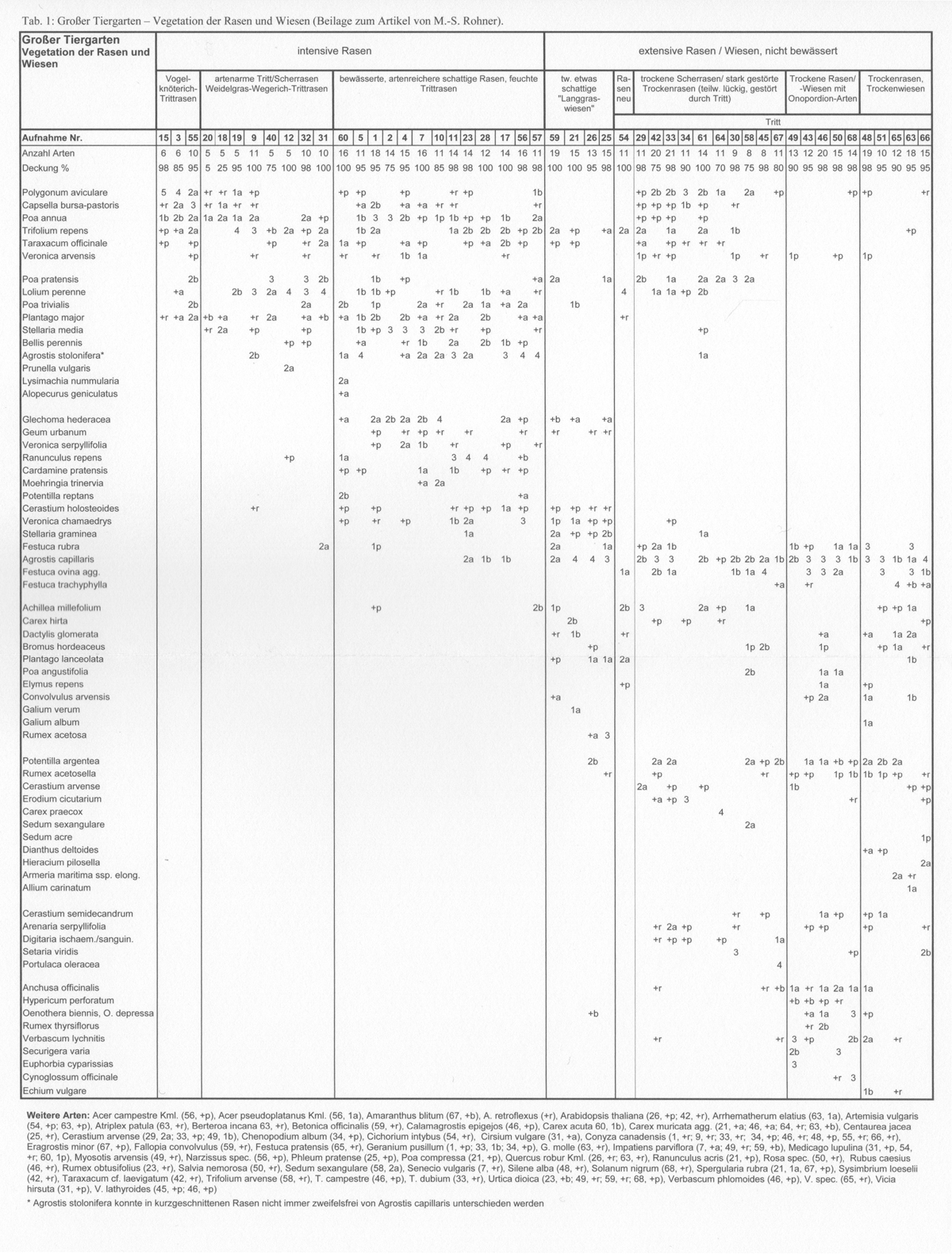
The reconstruction of several Baroque artifacts of military connotation that were omitted for ideological reasons during the replanting of Tiergarten in the ’50s and ’60s, were resumed after the fall of the Berlin Wall. An example is the new layout of all the former Baroque axes as big allées. These reconstructions were the reason for fierce protests from the ecologist fraction in the Senate. The following decision to commission a complete survey of the vegetation in Tiergarten, comparing it to older surveys, had the purpose to explain the changes in the forest, in terms of process of cause and effect.
Maria-Sofie Rohner, a wiry ecologist and botanist living in Berlin, started in 2006 this series of survey, in which 424 wild plant species were recorded. She discovered many different grassland types, that keep shifting depending on the intensity of human use, the policies of maintenance, and the level of forgetting and indifference. Sometimes the incoherence of a lawnmower induces interesting results and new plants and fungi, including the earthstar, take over. The survey method is time consuming and explains the way Rohner moves in Tiergarten. Slow pace, lingering, she examines the ground, often finding precious evidence of unexpected plant organisms. Her beautiful systematic charts are the precise coding of a reality.