4) Ghosts
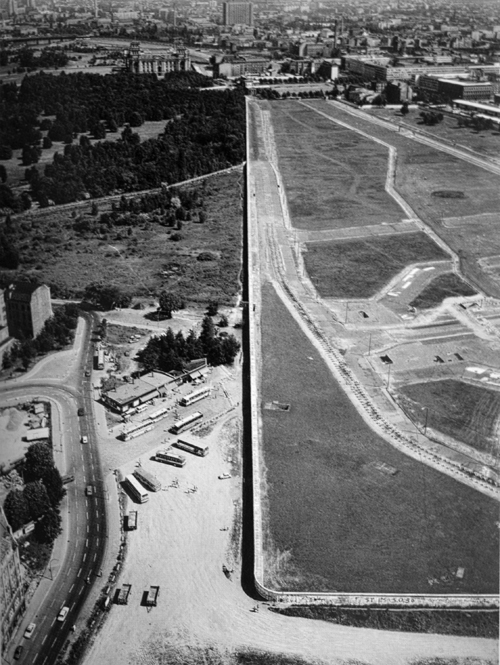
The east side of Tiergarten, the one now facing the Holocaust Memorial (2005), used to lie in proximity of the Wall and was severed from the rest of the forest by the Entlastungsstraße. For fifty years this area grew wild, sandy and dry, where many dirt trails run through tall grasses and rare plants. From the early ’60s up to the late ’90s quiet gardeners and bird lovers, considered this place an asset and took care of it by letting it be. A favorite among Berliners and a black hole in the awareness of the Berlin administration. Christian Petzold intensely uses this side of Tiergarten when shooting the film Gespenster in the summer of 2004, as the savage counterpart to the civilization of Potsdamer Platz; it is the place Nina turns to at the end of the movie, walking into the unknown and magic freedom of a dirt trail, off in the woods.
In 2006 an expert of Tiergarten, the botanist Maria-Sofie Rohner, thoroughly maps this spontaneous lush vegetation, claiming it an unexpected and precious dry grassland, a miracle of bloom and biodiversity just across from Brandenburger Tor and the Holocaust Memorial. In 2011, after the removal of the Entlastungsstraße and a crude laying of new paths and irrigation pipes on this area, she repeats her botanical survey, finding a depleted environment. The dry grassland has disappeared due to the zealous diligence of the Tiergarten management planners to reconstruct Baroque paths and to straighten up this unruly part of the forest.