Conversation piece
Saturday night, Sarah, John, and I talked about game theory and how it had changed their lives and relationships. Treating life as a game and oneself as a player was a liberating realisation, said Sarah. John explained remote manipulation of behaviour.
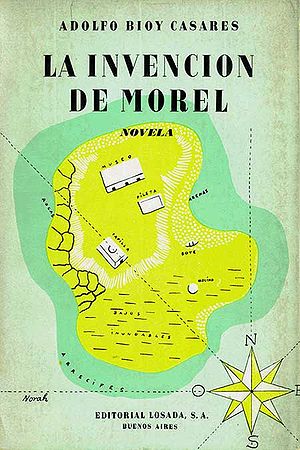
Earlier, we had talked about August Strindberg’s photographic experiments, the celestographs, and also about Adolfo Bioy Casares’ novel “The Invention of Morel,” in which a fugitive on a deserted island falls in love with a woman by watching over and over what turns out to be merely a recorded and looped projection of her. He hacks the machine at the heart of this deception, Morel’s invention, in order to superpose his own image onto this previous likeness of his love, Faustine, thereby submitting himself to the machine’s lethal radiation. A very cinematic sci-fi set-up, reflecting the loss of life and soul to the immortalising projector, that satanic machine.
Strindberg, the Swedish playwright, novelist, and painter, developed his method of astronomical photography around 1894 (while in Berlin, I think) – he distrusted photographic intermediaries such as lenses and cameras and instead placed the photographic plate itself under the starry sky to “expose” it to the cosmic luminaries over night. Whatever he recorded, it has little to do with a photographic image of the stars. It has everything to do with dust, residual debris, traces, mutation, translation, emanation, transference. It exposes the nature of a medium itself and that of its interpreter – who projects his subjectivity onto the only seemingly objective photographic receptor of visual or material evidence.
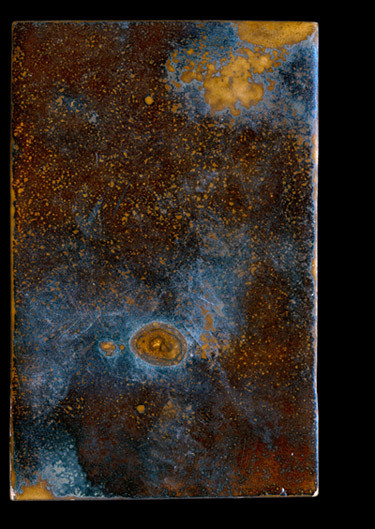
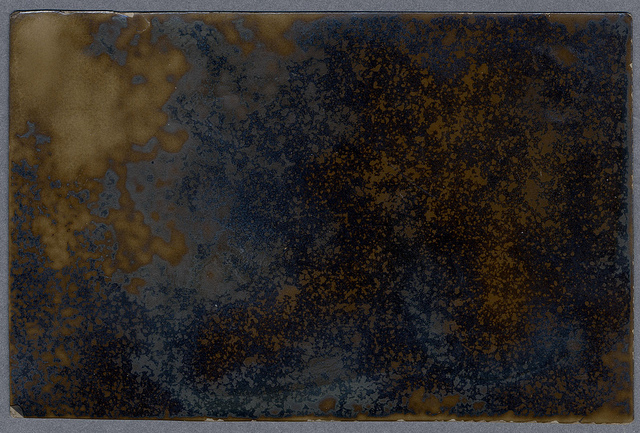
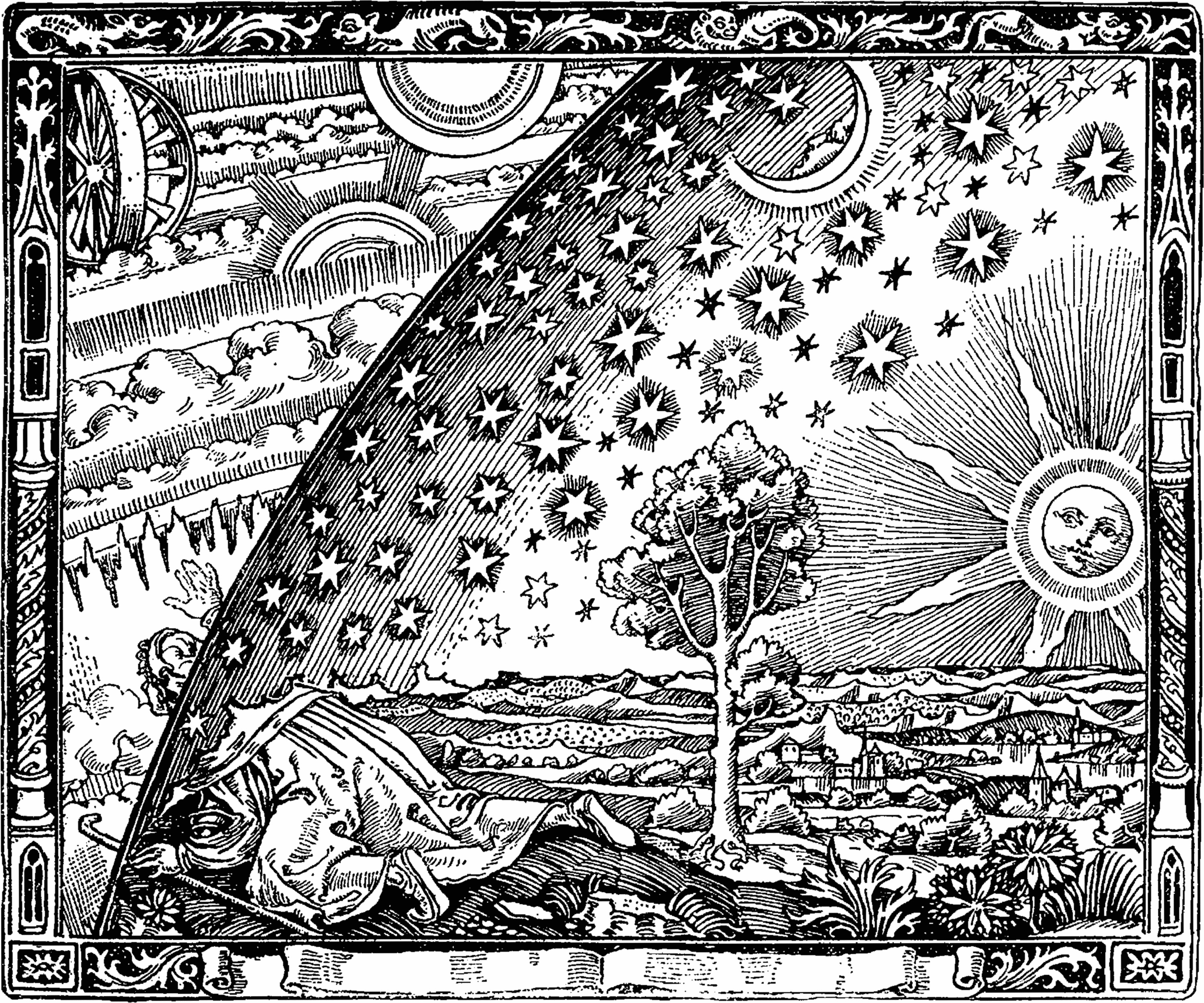
Strindberg, convinced he had found a new way to represent nature (which of course in a way he had), sent the plates to Camille Flammarion, astronomer and founder of the Société Astronomique de France in Paris, and the publisher of this faux medieval engraving in 1888.
He never received an answer.