Degrees of separation
A couple runs into the sun-kissed sea. Maybe they kiss, while they are facing the broad horizon that lies before them. It’s the last scene of Ozon’s portrait in five scenes of a disintegrating marriage: the moment Valeria Bruni Tedeschi and Stephane Freiss fall in love. It’s where the movie ends, after working its way, backwards, through the stages of love: from divorce to a party and misplaced kisses, to the child, to the wedding, to that moment on the beach.
An attempt to find the moment, where all started: The falling apart, falling out of love.
While all romantic beginnings are celebrated, glorified, yes over-stretched (how many times: he called me! he texted! first kiss! first sex! first fight!), when it comes to endings, people seem to fall silent. The end is kept short, as short as possible.
What to talk about anyways. When things don’t work out, maybe there is just not much to say about it. Life goes on. What the separation leaves behind is possibly not more than a void feeling, a nausea, you want to repress, get rid of or, at least, feel as rarely as possible. Minimised and reduced into a single moment, then locked away.
Yet sometimes, unexpectedly, it might emerge, appearing on the surface of everyday life. As it does in Natalia Ginzburg’s Caro Michele. The girl describes the end of her and Michele: she must have looked into the roses the moment he told her it was all over, as – since that day – every time she sees the flowers, she feels a chasm opening up under her feet.
Who would want to dwell in this state of anxious losing the ground under your feet. And still, there seems to be something in break-ups worth allowing some time.
The separation as a process rather than a single moment: Marina Abramovic and Ulay. The couple chose two starting points on the great wall of china. 5.000 kilometres apart from one another, they started their walk. When they met in the middle, their ending had ended.
Maybe it’s exactly that, which Ginzburg meant with the great chasm: The other person, so close and exclusive until then, all of a sudden disappears. A vertigo caused by losing the person, that you would like to share, more than with anyone else: with the lost one. What a consolation it must have been, knowing that the other person, even though on the other side of the vast wall, was still connected to you, in a contemplative phase, walking towards you, or rather: the end of you.
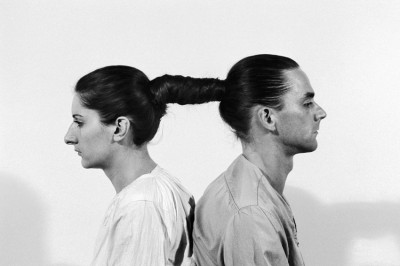
Marina Abramovic & Ulay, Relation in Time, 1977