From the Anthropocene to the Neo-Cybernetic Underground. A conversation with Erich Hörl.
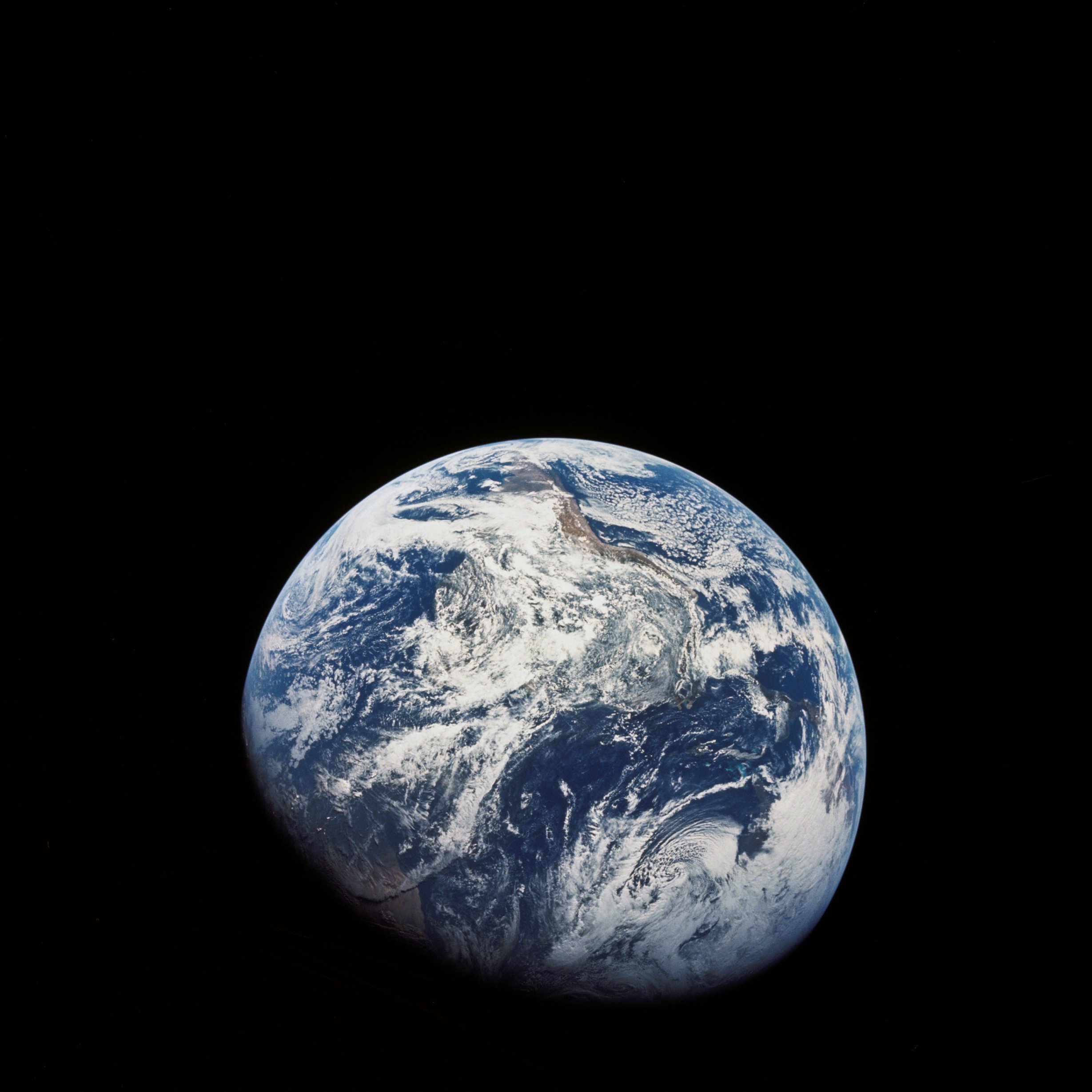
For the Fall/Winter Men’s Issue of one of China’s biggest lifestyle magazines – Modern Weekly -, I conducted an email conversation with media philosopher Erich Hörl. He is one of the philosophers currently involved in the ongoing Anthropocene Project at Haus der Kulturen der Welt in Berlin, as well as the author of a text published in the catalogue to the exhibition The Whole Earth. California and the Disappearance of the Outside, which was dedicated to the story of the image of the “blue planet” which has become one of the most influential images in history. The interview, which touches upon subjects such as unnatural ecologies, techno-organisms, environmentality, cybernetic capitalism and psycho power, will be published in Chinese this week, paired with an exclusive visual commentary by artist Katja Novitskova, author of the 2010/2011 Post Internet Survival Guide, which her commentary also is an update to (Modern Weekly, Fall/Winter Men’s Issue, pp. 58-61). Here you’ll find the English version of my conversation with Erich Hörl.

Our notion of nature is out of date. Humanity forms nature. This is the core premise of the Anthropocene thesis, announcing a paradigm shift in the natural sciences as well as providing new models for culture, politics, and everyday life. The “Anthropocene” is the new geological “age of mankind” as proposed by the Earth sciences. Popularized by Nobel Prize winner Paul J. Crutzen around the turn of the millennium, the term now stands for one of the most trailblazing scientific concepts of the present. If the opposition between humanity and nature is now suspended, how do we change our perspectives and perception? Is it still possible to think in concepts like “artificial” and “natural?” What does it mean for our anthropocentric understanding and our future if nature is man-made? What impact does the notion of global changes has on political decision-making? Which image of humanity appears if nature is shaped by mankind? A two-year project weaving together a network of scientists, philosophers, artists, architects, politicians, and cultural practitioners – radiating out of Berlin – is currently fathoming and probing the depth and reach of this new way of looking at the world.
Paul Feigelfeld
What exactly is the “Anthropocene” and how could it be defined as a global historical concept rather than a cultural one, in the sense of epochs or dynasties?
Erich Hörl
A concept is always an invention, says Gilles Deleuze, but in that it is not arbitrary, it doesn’t fall from the sky, but always is the response to a problem. So to which problem is the concept “Anthropocene” – as defined or better yet reintroduced by Paul J. Crutzen in 2002 – the response to? As he says himself, the Italian geologist Antonio Stoppani spoke of an “Anthropocene era” already in 1873. The concept, I’d like to say in a first approach, responds to the radical exposition of the problem of environmentality as connected with technization and resulting in what I call Being under the technological condition. The discovery of environmentality occurs by the end of the 19th century at the latest, and since then the problem of the environment is being pulled from the grip of oblivion, bit by bit becoming one of the central categories of contemporary thinking, yet this motion has never been scrutinized. To the same degree in which humans through technology prove to be the central agents in a new natural historical epoch, which will come to be called the Anthropocene, that is, the Human Age, an explosion of environmental agencies is happening, which put humanity in its place and demonstrates the multiplicity of all possible other and non-human agents, which up to now have been forgotten by European Modernity in its conceptualization of rationality – or even denied. This is precisely the conceptual paradox inscribed in the core of the Anthropocene. And during the discovery of environmentality its sense and meaning become reconceptualized. The question what environment actually means is being approached from many new sides. It’s more and more about natural and unnatural environments, even the environmentality of our new cybernetic nature. This is where we find the central context of the terminology: the explosion of human and non-human, animate and inanimate agencies as a result of unabashed technization forces us today – under the technological condition – to rethink our mindset and the rationality at the core of the Anthropocene. And this maybe even by punishment of the decline of our species. The very first thing the Anthropocene forces us to do is a radical critique of Anthropocentrism. Today, we must think on a level of non-trivial, complex environmentality, to reorganize our thinking profoundly according to the environment. And this doesn’t only concern the establishment of a theory, but also the institutions, politics, ethics, or even pragmatics. The concept of the Anthropocene functions as a kind of catalyzer for the whole bundle of questions connected to the radicalization of environmentality, even though without doubt people are already working on it and these questions travelled trough the second half of the 20th century. This is extremely urgent: the economy, governments and parts of academia mainly use the term Anthropocene to push their own interests and do lobby work. An enormous conceptual potential is being sacrificed on the altar of globalization and its rat races. The new management of our planet, which some want to install today, in a certain way cybernetizes the old anthropocentric vision and pushes it over the top. This is utterly untenable and distorts the problem and logic of the concept Anthropocene. The Anthropocene Project at the Haus der Kulturen der Welt in Berlin on the other hand aims to strengthen precisely the catalyzing function of the concept.
The “Anthropocene Observatory” by Armin Linke, Anselm Franke and the Territorial Agency, for example, asks in how far the proclamation of the Anthropocene is connected to a global restructuring of policitcal bodies – with the Intergovernmental Panel on Climate Change (IPCC) at its center –, with the establishment of internationaler institutions, the implementation of standards, reorganization of infrastructures, measuring technology, planning, new forms of knowledge production etc.
We need a radical artistic, philosophic and historic approach like this to oppose the recurring oblivion of environmentality in the form of pragmatist neoliberal concepts of ecology and a simple economization and institutionalizatio of ecology. We must ask about its scope, challenge and explosiveness, again and again. If the Anthropocene is supposed to be a critical concept, it must result in a discussion of a comprehensive environmentality: the ecologization of thinking and the mind, of subjectivity, desire, power, affects and so on.
Paul Feigelfeld
When does the Anthropocene actually begin? What makes it interesting is that it has many beginnings, resulting in not one, but many genealogies of the Anthropocene: An agricultural one, when humans start to migrate and bring seeds to different areas, changing the environment. A philosophical one: When man becomes a subject, with Descartes, for example. A scientific, technological one: When we start being able to describe and model nature through mathematics and technology. Or when we locate ourselves astronomically in the universe…
Erich Hörl
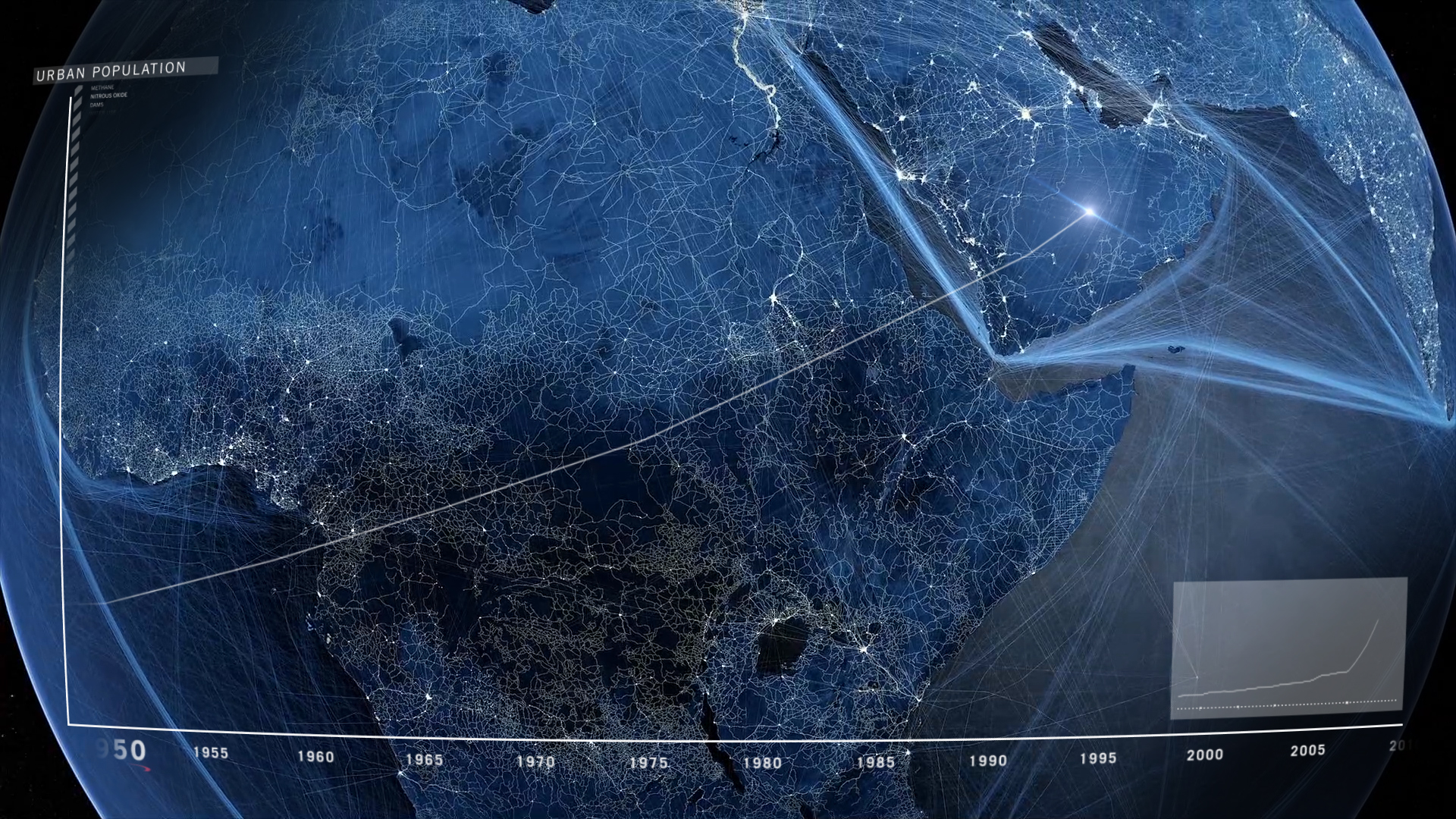
That’s a good and difficult question: Where do we locate the genealogy of something like human agency? Crutzen’s definition is based on geological data and recurs to the concetration of CO2 and methane in the atmosphere, which increases significantly since the late 18th century, as can be seen in ice cores. So, for Crutzen it’s about the question since when the human inscription in the geologic system is materially provable. But this is just the beginning of the question and once we have the whole horizon of the problem figured out, we can and must proceed more experimentally and far reaching.
We certainly can and must analyze the cultural and media historical connections, which lead to the establishment of this illusionary anthropocenic monopolizing of agency – you just named a few. Which are the essential cultural and media technological constellations, which are the central stages, on which the anthropocenic illusion is set and where, on the other hand, do objections emerge? Thinking about these scenes and counter-scenes is a central part of the diagnostics of our present. Interestingly, the technization, which as the technology of man, as an extension or prosthesis of deficient man, was an effect of the monopolizing of agency by man, leads us beyond this anthropocenic illusion: today, technology is beyond all primary, constitutive relation to man, which constitutes the abyss of the Anthropocene and the surpassed concept of technology as an instrument and tool on the contrary a multiplicity of linked milieus of relations, from which agencies emerge. Technology can only be thought of as techno-ecology. The Anthropocene, we might say, is ultimately only to be grasped non-anthropologically, from its limits. The transition from the technical to the technological condition which happens in the 20th century as the century of Cybernetics, brings us before this anthropocenic illusion like nothing else. This is our condition. And if we still have a philosophical challenge, it is the destruction of this illusion.
Paul Feigelfeld
Cybernetics is also partly a Chinese invention. Norbert Wiener worked at Tsinghua University in Beijing in the early 1930s, and there is a lot of Daoist philosophy in the feedback loops of Cybernetics and the beginning dissolution of the strict separationof nature and technology. Like every universalist approach, Cybernetics also seemed obsolete at some point, nevertheless we live in a cybernetic reality. How did the re-entry of Cybernetics as a philosophy in the recent years happen? Why are we again interested in Holism, encyclopedias (which were the main curatorial concept in the recent Venice Biennial), cabinets of curiosity, while we know that these concepts of completeness can never work? Is there a nostalgic thing about utopias?
Erich Hörl
I don’t think that this general ecologization and environmentalization has something to do with Holism and such.
Today we are finally in a situation to liberate the ecologic-environmental from the bio-immuno-political excess of it all, but also from the wholesome, untouched, ultimately healthy and sacred in general, which have followed it throughout the 20th century.
Especially new media technologies – I’m thinking of ubiquitous computing, sensory infrastructures, multi-scalar networks – demonstrate to us the general ecologic facts with great sobriety, that is, not through romanticisms and biopolitically distorted. What happens here is a fundamental reassessment of concepts, all of which we naturally have to understand first and drive ahead more energetically. The material media ecologies of today provide us with the opportunity to finally formulate an ideologically deweaponized concept of ecology in the sense of a radically relational thinking. Timothy Morton, for example, has spoken about an “ecology without nature”. A speculative concept of ecology beyond ecology as a new religion. This relates to a comprehensive revolution in thinking, a fundamental transformation of attitude and we have to get closer to this.
Especially in the second half of the 20th century, this approach has been thwarted: While the Cyberneticians had already hinted at basic ideas of ecologization (f.e. Gregory Bateson’s “ecology of the mind”), it was often obscured again. Be it by certain obsessions with planning which were always present in Cybernetics and which go all too well with today’s ideas for a planet under new management, or be it by diverse fundamentalist occupations of the concept of ecology, which could not cease to repeat the anthropocenic opposition of nature and technology while proclaiming an eternally Rousseau-ian “back to Nature”.
Paul Feigelfeld
How do you imagine the future? How will technology, art, media, ecology, etc. – how will theory and practice relate to and process each other?
Erich Hörl
If we don’t want to completely drown in cybernetic capitalism, if the ongoing hyper industrialization and the contemporary psycho power do not colonize everything and lead it towards a complete enshrinement of Being – and there are moments when I do gravitate towards this kind of alarmism -, then I can imagine that technology and art together will advance the process of the ecologization of Being. Art and philosophy, particularly media theory, have to work through the decay of the anthropocenic illusion, and precisely not against technology, but on eye level with the contemporary technological, techno-ecological condition. Félix Guattari bet on the setting free of creativity through new media technologies in the late 1980s and early 1990s and confidently looked forward to the emergence of a new paradigm, which he called the “aesthetic paradigm”. Even though the cybernetic capitalist development has undoubtedly caught up to Guattari’s vision and especially the creative has become completely industrially exploited, I do see a certain potential there today: a radical theoretical artistic experimentation with (media) technologies still is the best form of appropriation and exploration and we cannot let anybody forbid us from doing that. I dream of a neo-cybernetic underground which grows to be the germ cell of a general ecological practice, which does not let itself be dictated the meaning of the ecologic and of technology, neither by governments, nor by industries.