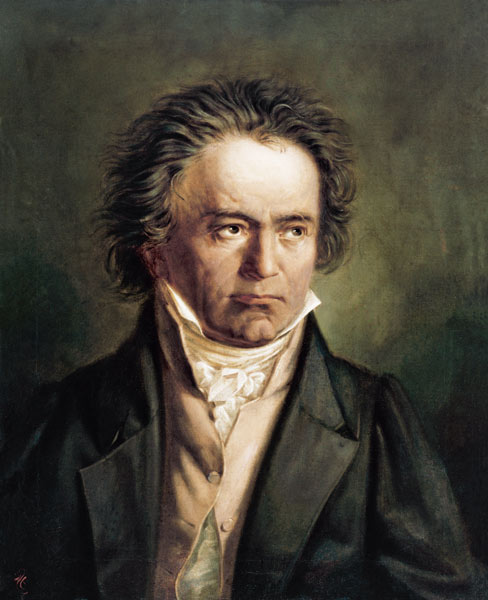
Hans Bankl und Hans Jesserer
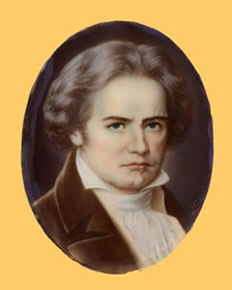
The first symptoms of losing his hearing Ludwig van Beethoven experienced when 26––at 48 he went totally deaf. Historians suggested that Beethoven was suffering from Paget’s disease of bone, but the real cause seems like a detective story:
At first Beethoven tried everything to stop the progression of his disease. Balneotherapy helped just as newly promoted ear-trumpet systems out of wood, stone and metal. The consequences of progressing deafness shaped Beethoven’s personality and appearance, he retired from public appearance and gave in to alcohol and discontent. In 1818 he didn’t hear anything anymore but continued to compose. Beethoven died in 1827 when his true greatness was not considered. It took 36 years until the company of music lovers exhumed his remains. During the grave opening in October 1863, the physician and medical historian Franz Romeo Seligmann took three pieces of bone from the head as a souvenir. He put it in a tin labelled “Beethoven” and after Seligmann’s death the tin went to his son, who left the tin to his son and so forth. The tin went from one generation to the next. In 1972, a gentleman travelled from the south of France to Vienna to visit the Institute for the History of Medicine. In his bag was the tin. Two pathologists, Mr. Bankl and Mr. Jesserer, confirmed the authenticity of the bones.
In 1988 they conducted another exhumation. In his second reburial, Beethoven was moved to a grave at the Central Cemetery and it was recorded in writing that just the three bones lacked which Mr. Bankl and Mr. Jesserer now had in their possession. It was also detected that Beethoven’s deafness didn’t originate in the Paget’s disease but in a cochlear otosclerosis.