How Do I Build My Yacht?
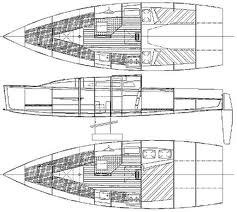
Before I arrived at the apartment in Hamburg where my husband Erwin and I are spending the weekend, the question “How do I build my yacht?” had never crossed my mind. Luckily, there’s a book here that goes into great detail on the subject: the helpfully titled How Do I Build My Yacht? (Schemes and Construction Methods; Tips and Warnings). In the first chapter, “Prerequisites for Self-Construction,” under the section “Partner, Family, and Psychology,” the author warns: “Sailing with a yacht is a partner sport. If you’re single right now, don’t be discouraged! You can easily build a yacht alone without developing psychological problems. In my case, it has largely been true that when there was no partner around to irritate me while I was building the boat, somebody always showed up around the time it was ready to sail (thank God!)” The first rule of building a yacht, the author continues, “is that you should really just abandon the project completely if your girlfriend isn’t into it.” Looking at the author’s photo, it’s clear that this is the face of a guy who has suffered the wrath of ex-lovers who didn’t share his passion for yacht building. (Or that’s how he explains the breakup, anyways. The ladies might point to the moustache he refused to shave or his insistence on using sailing terminology around the house.)

Another exciting title from the apartment’s book collection addresses a fear it hadn’t occurred to me to have, namely: Don’t Be Afraid of Projecting! The book is not a self-help book urging its readers to project their insecurities and jealousies onto strangers and loved ones with abandon, but rather 290 pages on how to gather the confidence to project slides and films onto the wall.

The book opens with a surprisingly philosophical introduction:
“In every minute and every hour we are besieged by endless impressions and results, which enrich and influence our life and our very existence. That, which may transpire in this very second, is, in a split second, already “what’s happened,” or history. Occurrences have already occurred – even when they are the basis for a new occurrence, the old ones only survive in our memory. And even there it will fade in time, and then disappear completely. Acquiring a familiarity with what has transpired, drawing knowledge from the past and thereby making use of it, presupposes an exceptional memory (and who has that anymore?) or accepting the fact that the past must be fixed in some sort of unforgettable form, and thus preserved.”
When traveling, I try to maintain a tourist’s annoyingly cheerful optimism. Here in Hamburg, after perusing the apartment owner’s books, I can picture the number of yachts he’s built with supportive girlfriends over the years, hauling timber to the backyard, making love after extracting splinters from each other’s fingers, and eventually sailing into the sunset on the Elbe. And then, a few years later, his face in the flickering light of a projector, more serious now, showing slides of his safari in Tanzania to a bored audience of friends and relatives. Whereas in my own library, all of the educational books I own represent knowledge gaps, however aspirational. I’m thinking of my thick Learn Romanian! book, as well as any cookbook I’ve ever purchased.
In closing, an excerpt from the “International Yacht Dictionary,” which reads rather like twin poems about a sailing disaster:
Asking for help
1 Mayday
2 Pan Pan
3 emergencies
4 present position
5 very urgent
6 please come
7 please hurry
8 please help
9 not understood
10 yes
11 no
12 thank you
Problems
1 collision
2 shipwreck
3 man overboard
4 capsize
5 stove in, holed
6 explosion
7 fire
8 smoke
9 gas
10 danger
11 pollution
12 fouled anchor
13 dragging anchor
14 to run aground
15 lee shore
16 to founder