Iceland Spar
Iceland spar, a transparent calcite very common in nature, has the property of polarising light. Specifically, the double refraction of light through the anisotropic crystal led physicists to understand the nature of light as a wave. When a ray of light enters the Iceland spar, it is split into fast and slow beams. 19th century physicists such as Huygens, Newton, Fresnel, Maxwell, and others had it delivered from Helgustaðir in eastern Iceland for their research.
It also figures prominently in Thomas Pynchon’s “Against the Day”, where it has the ability to split one person into two individuals. The double nature of Iceland spar reminded me of something I came across at CERN, a material developed specifically for the Large Hadron Collider called lead tungstate: A substance clear as glass, but heavy as lead, absorbing the incoming particles and at the same time re-emitting the absorbed energy in the form of light – that is, making the process visible.
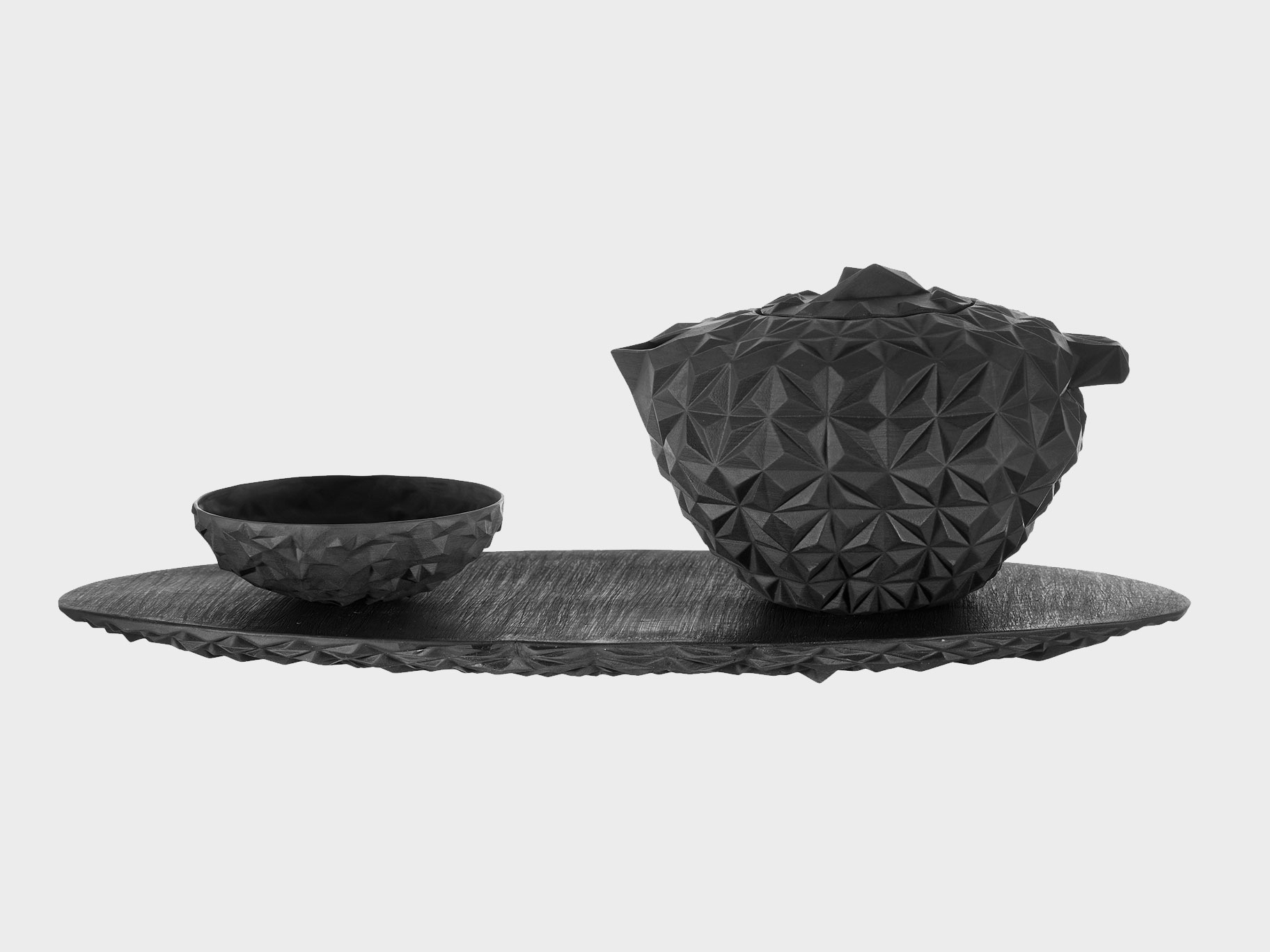
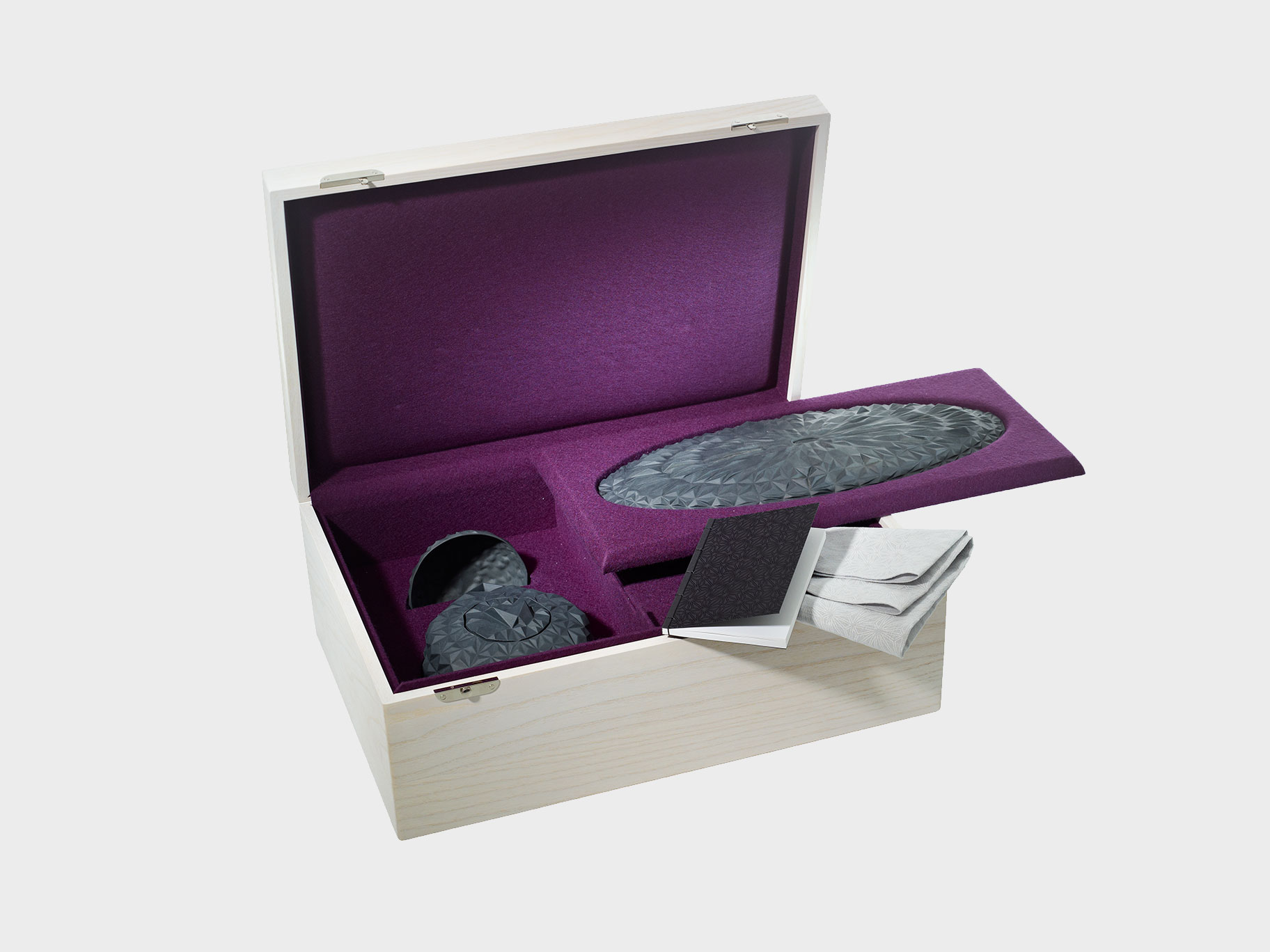
A while ago Jan Verwoert, Jan Wenzel, Paul and me formed an amorphous author collective to write a story called “Coral Gardens and their Magic”, a title borrowed from Malinowski. The story, which became stranger and stranger by the day, accompanied a work by Olaf Nicolai, “Cula”: A tea set designed using software that simulates the growth of cells, specifically cancer cells, produced by the Porzellanmanufaktur Nymphenburg.
The text is riddled with the mannerist stuff that a Pynchonesque dream is made of: palindromes, mirror stages, bilocation, anagrams. It features guest appearances by Saussure, Captain Nemo, Möbius, and a mysterious short man in a three-piece suit. It tells the story of F., a clerk in a small-town T&T Wire and Telegraph Office, who passes the time by reading his costumers’ weeklies and private dispatches. F. is drawn to the mysterious scientist E.L. and travels to meet him. During his visit he is offered Darjeeling in a beautiful Iceland Spar cup.
Here is Part III of the story, the last part.