In Praise of Empty Elevators
By empty, I mean an elevator with nobody else in it but you. Virginia Woolf once sung the praises of a room of one’s own; she may as well have been speaking of elevators: tiny rooms with a wall of illuminated buttons and, more often than not, a mirror. Difficult, maybe, to get a manuscript banged out in an elevator, but I would argue that the potential for (literal) reflection and insight in an elevator, when alone, is equal to any mulling done alone at a desk.
In an empty elevator, I always feel the way I wish I did in church. Uplifted (again, literally), profoundly grateful (that nobody else is in the elevator, except maybe God, who doesn’t take up room or make awkward eye contact), and optimistic (I’m going somewhere, and fast). I never want my elevator rides alone to end. I could keep going for another ten minutes, my ears blissfully popping, and still be sad when the ding comes, the doors open, and there is nothing to do but get out, or descend.
Elevators with strangers are unequivocally terrible. There’s nowhere to look and nothing to say. Even silent movement (adjusting a scarf, pretending to read) feels staged and silly. Anyone who talks about weather in an elevator should be made to take the stairs. Same with anyone who says “goodbye” to fellow elevator travelers when they disembark.
The worst moment in an elevator, even worse than the elevator suddenly halting and the lights going out, is somebody else joining your empty elevator as you’re going up. The ding, before your floor has come, that sinking feeling (again, literally), the panic, the face adjustment (trying desperately for neutral), and, finally, the curt nod (if you must) when the offender steps through the doors and ruins everything.
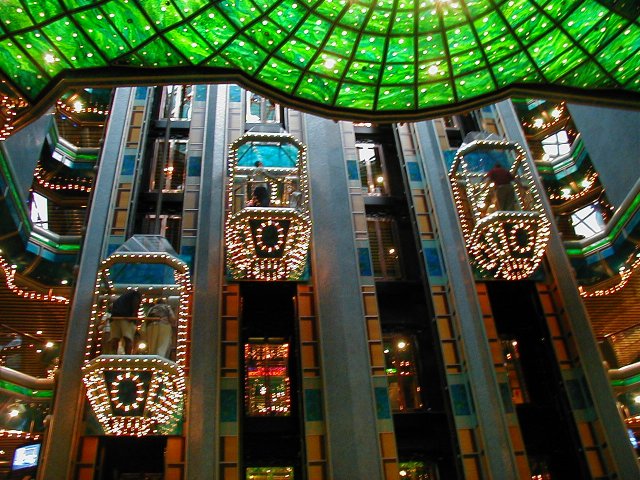
Glass elevators are game changers. I am afraid of heights and, alone in a skyrocketing transparent box, I lose it. When faced with a glass-elevator situation, I like to casually wait around for others in the lobby, and sidle close to them once we’re in the elevator so I won’t be afraid. If they then edge away, I simply move closer, even if it means we’re shuffling around the elevator in a circle. This form of elevator tag tends to adequately distract me from watching the ground fall away, so that I can reach my desired destination without going into a fetal position. I always end these sorts of elevator interactions with a protracted hug, even if that means the door closes and one of us misses our floor. This has occasionally gotten me barred from buildings (such as the Atlanta Hilton), which favor glass elevators and other unfortunate ’80s architectural quirks.