Landesvater
ministerpräsident is the title worn by the head of the government in any german federal state. his power more or less depends on the size of population and the economic contribution to all of germany’s gnp.
according to the way the ministerpräsidents interpret their authority, germans sometimes call them landesfürst (prince of the land). but the mainly common nickname is landesvater (father of his country), which refers to the fact that like a father, they care for needs of their family (the country).
 one, if not the most famous landesvater, was franz-josef strauß, bavarian ministerpräsident from 1978-1988. 35 years ago today, on the 6th november 1978, he got first time elected by 59 percent of the bavarian voters. his party, the csu (christian social union, only electable in bavaria), held the absolute majority of votes (>50 percent) from 1970 to 2008, and now again since this years elections.
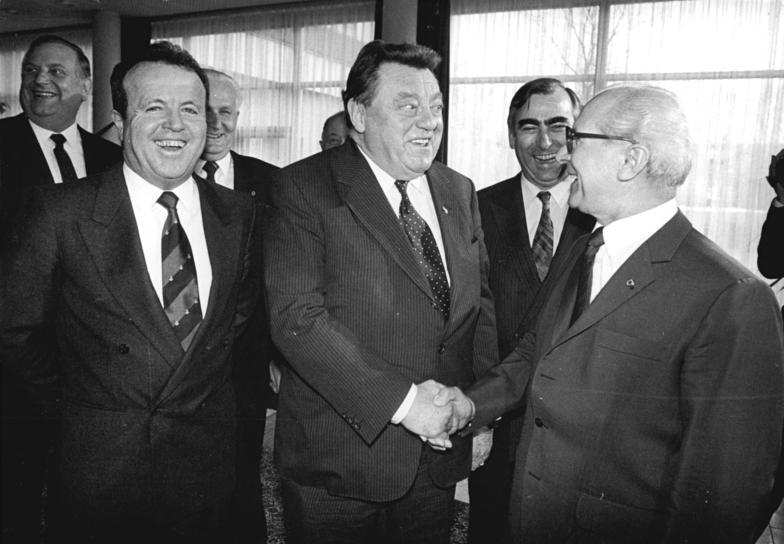 conditions comparable to socialist countries and maybe the reason why as a kid, i always confused franz-josef strauß with tito of yugoslavia. but that might also have happened because of their similar figure and because despite their very opposite ideological views, they were both the archetype of the landesvater; men from the midst of the people, both passionate hunters, taking the opportunity to manage their countries needs at small hunting trips. as they were fond of strauß, bavarians also had a lot of respect for tito and you could often hear them say about one of the both “a hund is a schoo”, a bavarian saying that admiringly points out to the fact that someone is really crafty and always gets what he wants. the more shifty the methods were, the higher was the admiration. but in the end one should not forget that beside their populism, both of them were highly ideological…
 it was also on the way to a hunt when franz-josef strauß in 1988 was hit by a stroke after leaving his helicopter and finally died from the effects of the stroke. the tree stand he was on heading for by the way was owned by the family of thurn und taxis, known for developing the german postal service into an multi-national cooperation in the 19th century and for being one of the biggest owners of wood in bavaria beside the state and the catholic church.
bavarians were shocked by his death and the grief was great. where tito still holds all records when it comes to heads of states participating at a state funeral, franz-josef strauß’ funeral might still be the far biggest funeral in the history of post-war germany. my father, like every bavarian civil servant, was on occasion of the funeral gifted with a picture book summarizing the crucial stations of the landesvater. the cover picture was strauß’ coffin covered by the bavarian flag, surrounded by a death watch with soldiers carrying torches.
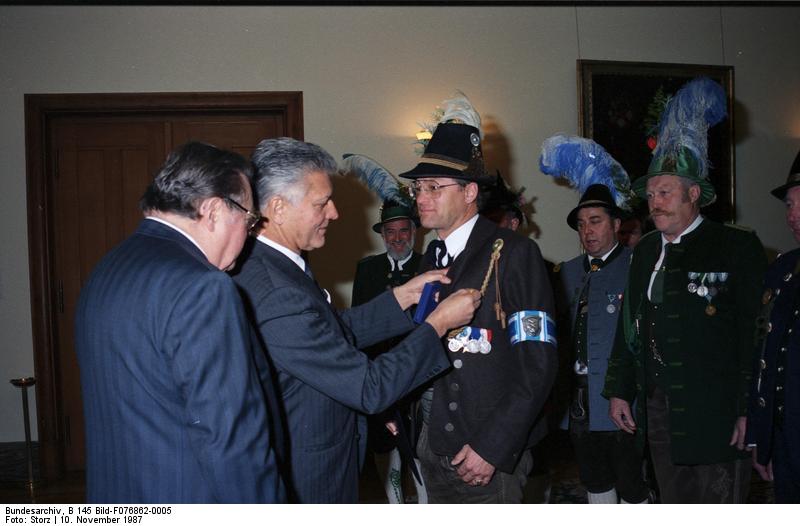
 among the scenes shown in the book were of course some of his meetings with other statesmen from all over the world, including a a remarkable number of communists. remarkable on the one hand because already the german social democratic party was too far out left for strauß, on the other because the federal states don’t do their own foreign policies and leave that job to the german minister of foreign affairs. the characteristic behavior of the bavarian state to communicate with the rest of germany like with a foreign state was not invented by strauß, but as in everything that became typical for bavaria and politics since world war II, he pushed it to the limits. again a remarkable fact, where he, before becoming the landesvater, served as minister for special purpose, minister for atom-energy, defense minister and finance minister.
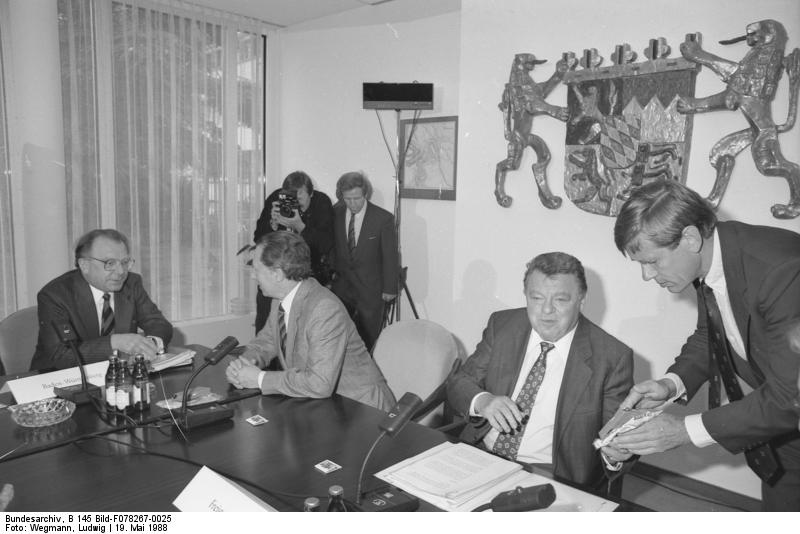
in office he also produced a large number of scandals no regular politician would have survived. the most famous one must be the spiegel-affäre where several journalists of the magazine were arrested because strauß accused them of treason. rudolf augstein, founder of the spiegel, remained in remand-jail for 103 days without ever being judged afterwards.
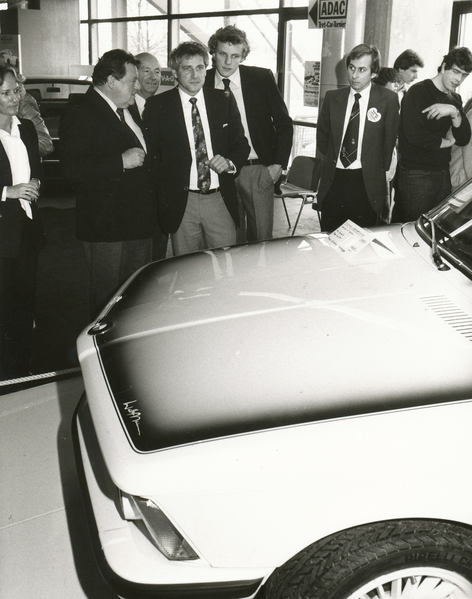 as you could imagine, there are thousand of stories more to mention. for example, his privately organized trip to see, as one of only a few western politicians, enver hoxha in albania, his famous rhetoric talent, his attempt to become bundeskanzler, and so on, and so on…
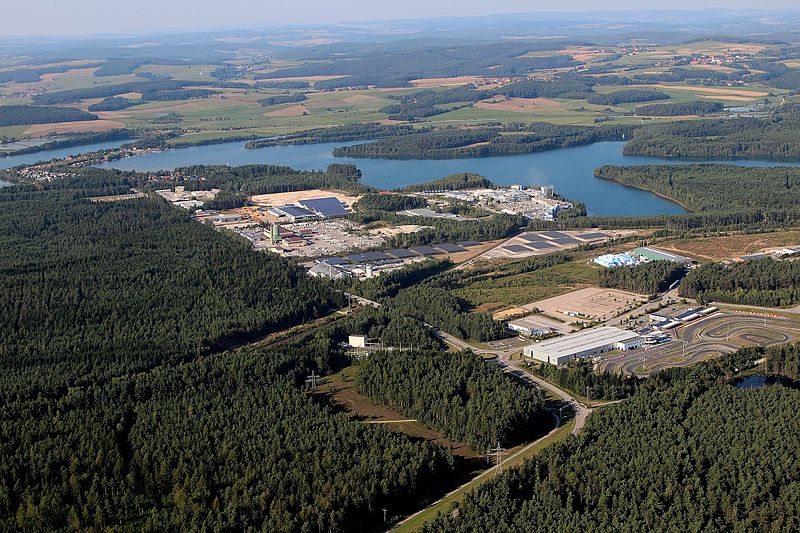
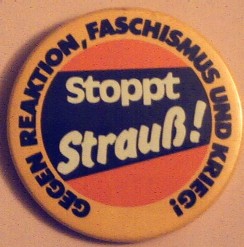
my very own memory of him is his constant absence. of course he was absent in my life before i had personal contact with him or at least with what he decided because i was only 5 years old and didn’t care about politics. what i cared about a lot was building something with lego and for that reason i was very interested in the big construction site that suddenly was there where i took walks with my grandparents every weekend. my grandparents told me strauß is building there. they told me this is going to be a nuclear reprocessing plant and i didn’t really understand what that means, so i went on to enjoy the construction equipment. during the next walks they told me, that all the policemen are they because strauß told them to be there and later they told me that all this people with the funny hair and torn cloth are there because they don’t like strauß. i learned that strauß didn’t tell this people to built the village they built next to the construction site but he told the construction workers to built the big green fence between the village and the construction site. i heard people talking about something stauß said, decided or told someone to do everywhere i went. next thing they said was that strauß said there has to be barbed wire fence.
 and when i was told to stay in the house all day, even where the weather was getting better and spring was coming, when i was told not to drink milk any longer and not to eat my beloved mushrooms, when the people from one day to another didn’t talk about strauß any longer but of that whatever chernobyl, i was sure it has nevertheless to with strauß.
the talking about strauß was back soon. and the talking got worse and worse. in the beginning it was only the people with the funny hair and the torn cloth that talked bad about him, meanwhile everybody seemed to be quite angry when his name was mentioned, even those who were happy with him an always said “a hund is a school”…
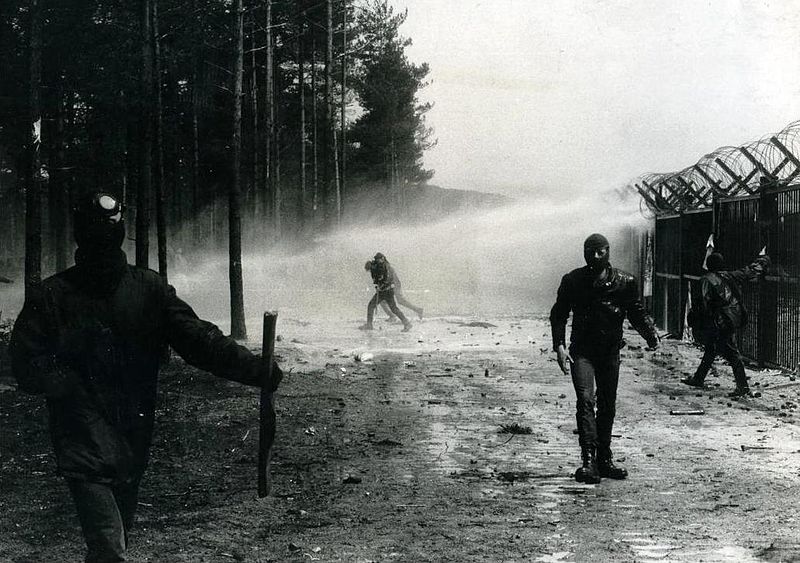
 i was allowed to go outside again and my aunt and my uncle took me with to the constuction side. this time the walk was very awful. a lot of people where out there that day when the police came up with something my aunt tells me is called water cannon. i thought that that’s quite funny, a big version of the small water gun my parents bought my. i got a little wet but my uncle didn’t laugh. the people with the funny hair, meanwhile i learned they were called protesters, were also not amused and brought something that i later learned is called molotov-cocktail. the atmosphere changed right away and the police reappeared with stuff that, how i also learned later, is called stun grenade and rubber bullet. helicopters that went quite low also threw this molotov-stuff.
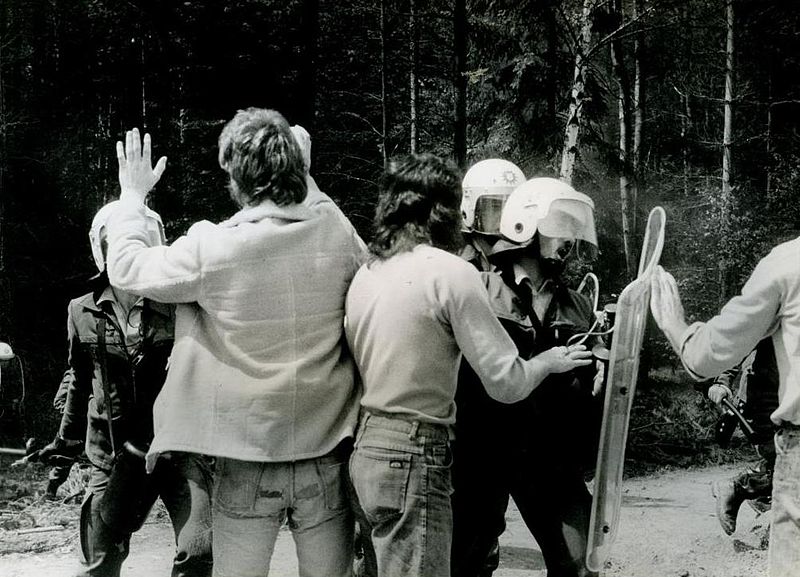 before i really realized what happens, my uncle grabbed me under the arm and began to run. we hid behind a pile of sand and my aunt constantly put her hand on my eyes so that i couldn’t see anything. the only thing i remember is a policemen that ran by very fast, jumped into a police car that had all doors and the trunk lid open and drove away very fast. some protesters were following him as fast. the policemen lost control of the car, got off the track and hit a tree. then he got out of the car and ran into the forest.
on our way home there were hundreds of wounded people. old people, young people, kids, the people with the funny hair and the torn cloth, policemen, construction workers. the only one that i felt was absent was of course strauß.
 the next morning i had to see a doctor. my left food was twice as thick as usual and really hurt and the doctor told my mother that it has something to do with a mosquito that stung me and the funny water cannons. my parents were very angry with my aunt and my uncle, stauß died, the nuclear reprocessing plant never got finished and the green party talks with the csu about coalition…
pics: (1) Bundesarchiv, B 145 Bild-F023363-0016 / Gathmann, Jens / CC-BY-SA /// (2) Bundesarchiv, Bild 183-1990-0226-315 / Mittelstädt, Rainer / CC-BY-SA /// (3) Bundesarchiv, B 145 Bild-F076862-0005 / Storz / CC-BY-SA /// (4) Bundesarchiv, B 145 Bild-F078267-0025 / Wegmann, Ludwig / CC-BY-SA (5) By Art + Design Works (Own work) CC-BY-SA (6) By A. Köppl (Own work) CC-BY-3.0 (7) By Sirdon (Own work) [Public domain] (8) By Oliver M. GRUER-LAVIN (Flickr: Wackersdorf) CC-BY-SA-2.0 (9) By Oliver M. GRUER-LAVIN (Flickr: Wackersdorf) CC-BY-SA-2.0