Metatext
The text Brittany posted today from across the ocean (hey Brit! How are you? I miss you!) on authorial omniscience reminded me of something William Kentridge said in a workshop a few weeks ago: That it sometimes takes years for him to realise what he was doing with a specific piece, to become aware of the subconscious symbolism or iconography he was employing. Fair enough – a kind of delayed self-realisation through one’s own work that might be one of the most important aspects of it anyway. It is also a pretty handy statement because it means as an author or artist one has the ability to retroactively integrate all the critical interpretations projected onto the work by professional analysts and claim them as one’s own intentions if considered applicable, or dismiss them if not.
Rainald Goetz in loslabern writes about the opposite conceptual model: his epiphany during a cab ride of writing a book that already incorporates all possible interpretations of it, every answer to all possible interview questions aimed at the author during the post-publication machinery of heuristics and PR, a book that could be text + kritik at the same time. He calls it all-in-one literature but also recognises that it would entail its own imprisonment: he sees “das Knasthafte dieser Literaturkonzeption”.
Jorge Luis Borges writes:
“Why does it make us uneasy to know that the map is within the map and the thousand and one nights are within The 1001 Nights? Why does it disquiet us to know that Don Quixote is the reader of the Quixote, and Hamlet is a spectator in Hamlet? I believe I have found the answer: those inversions suggest that if the characters in a story can be readers or spectators, then we, their readers or spectators, can be fictitious. In 1833 Carlyle observed that universal history is an infinite sacred book that all men write and read and try to understand, and in which they too are written.”
Flann O’Brien (aka Brian O’Nolan), the somewhat forgotten Irish author of surrealist meta-fiction (I always liked the name Meta for a girl), conceived of a novel in 1939 in which the protagonist, a writer, is confronted by his unruly characters. Several of the characters in At Swim-Two-Birds conspire to drug their author in order to have more free time while he is sleeping. At the same time, Trellis, the “writer”, falls in love with and knocks up Sheila, one of his characters. The hybrid love-child Orlick then in turn becomes a writer and inverts the Hegelian master-slave relationship by conceiving of a novel in which his father-author is tried and convicted by his own creations. A symbolic and prosaic patricide can be averted at the last minute when Trellick, a student in real life, passes his exams and the novel ends.
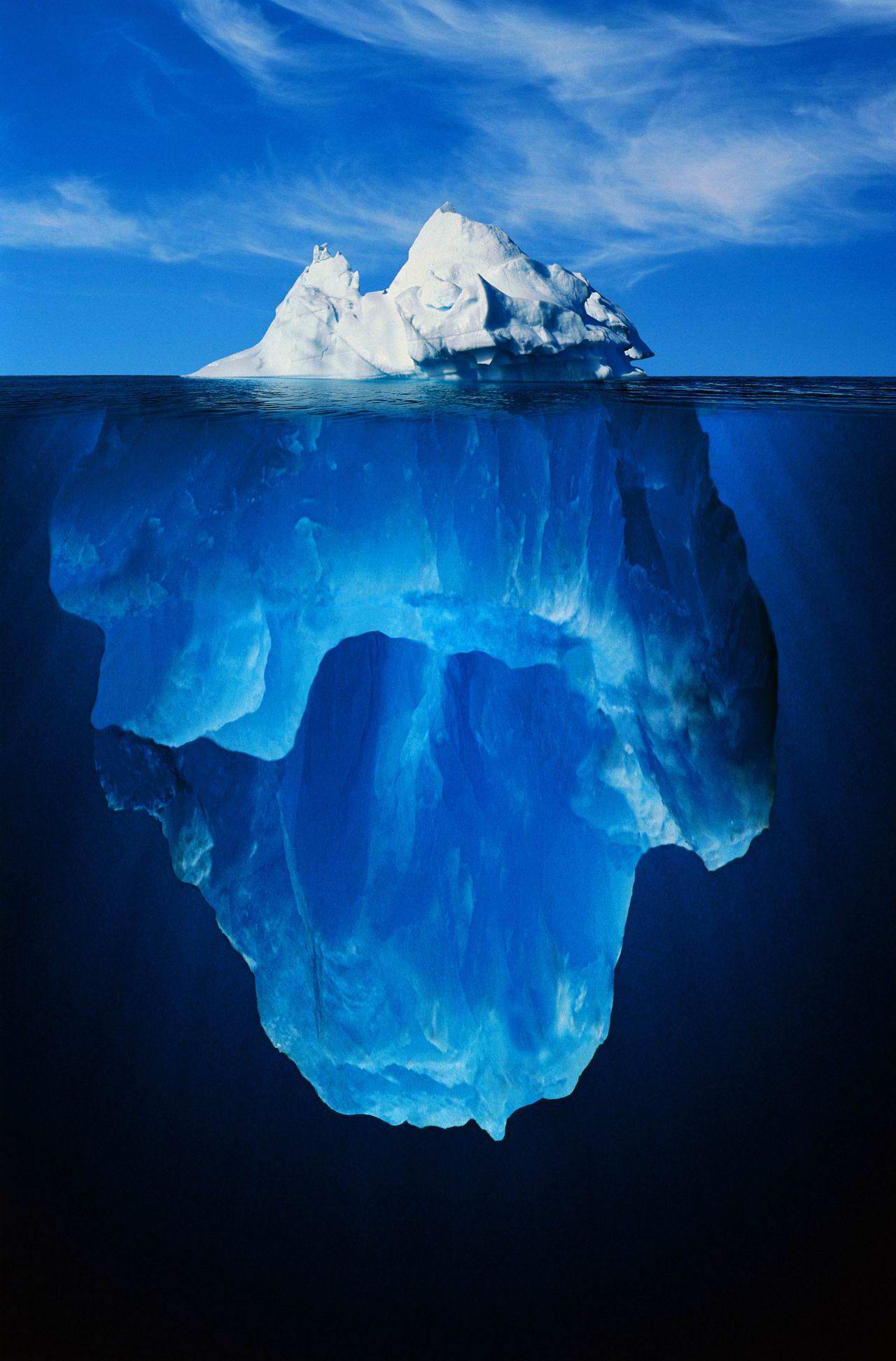
Hemingway used the motif of the iceberg – of which only ten percent floats above water and is therefore visible – to advocate a writing theory of omission, of austerity. Cutting away whatever is not absolutely necessary for the plot, leaving the real psychological development of the narrative to the white space between the letters and the lines. The darkness of the looming symbolism lurks under water. However, to come back to Brittany’s question about omniscience, Hemingway did attest that the author needed to know everything that he was omitting:
“A few things I have found to be true. If you leave out important things or events that you know about, the story is strengthened. If you leave or skip something because you do not know it, the story will be worthless. The test of any story is how very good the stuff that you, not your editors, omit.”
The best stories are unwritten, omitted. The same counts for 60pages. A mesh of things unsaid, hinted at, insinuated, encoded, alluded to, not yet thought of, projected, imagined. I don’t think I quite believe in Hemingway’s theory of authorial sovereignty – in my experience, the texts lead a life of their own and are messing with me more than I am messing with them.