Modern Art here in Lichtenberg #2
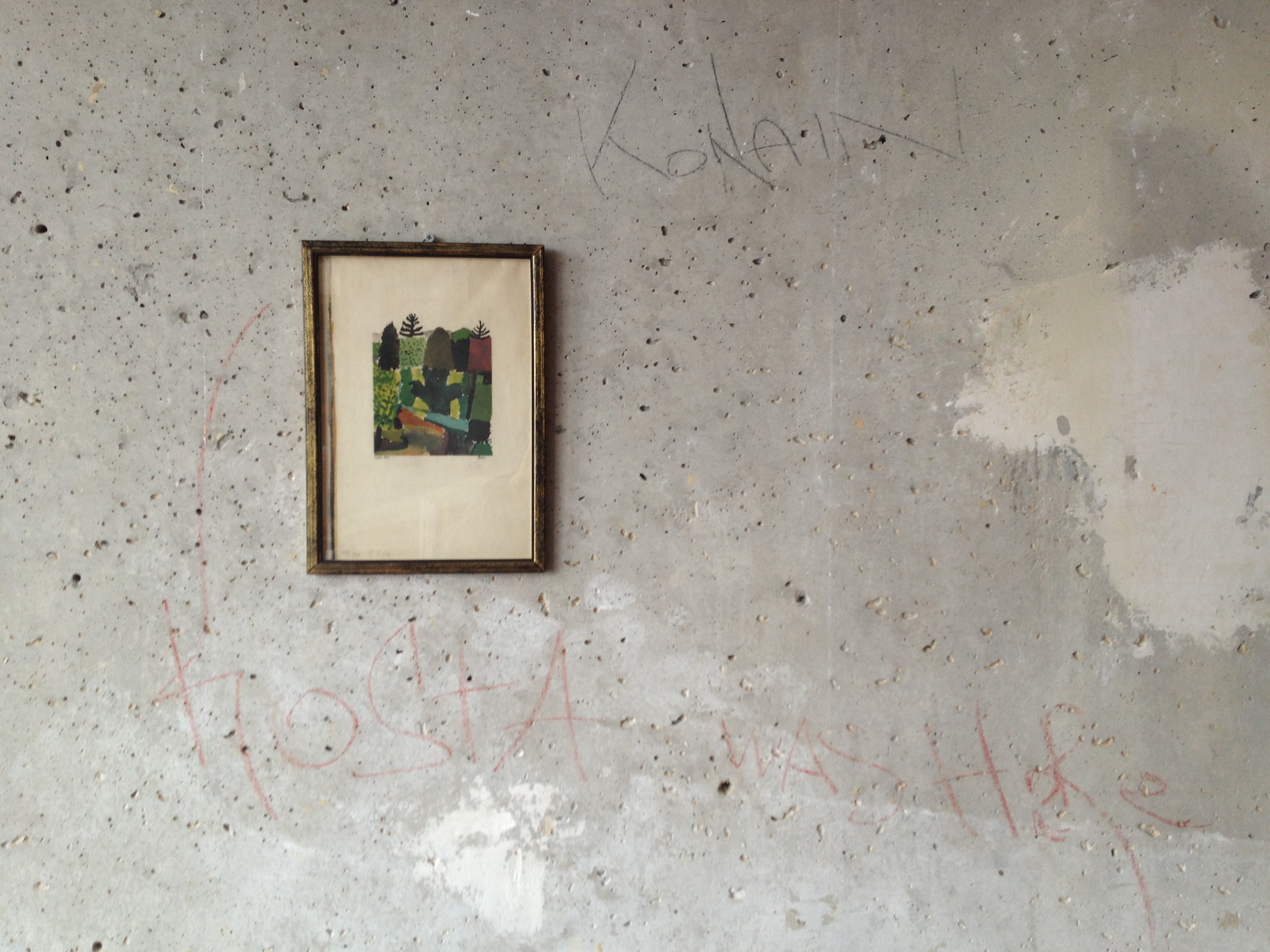
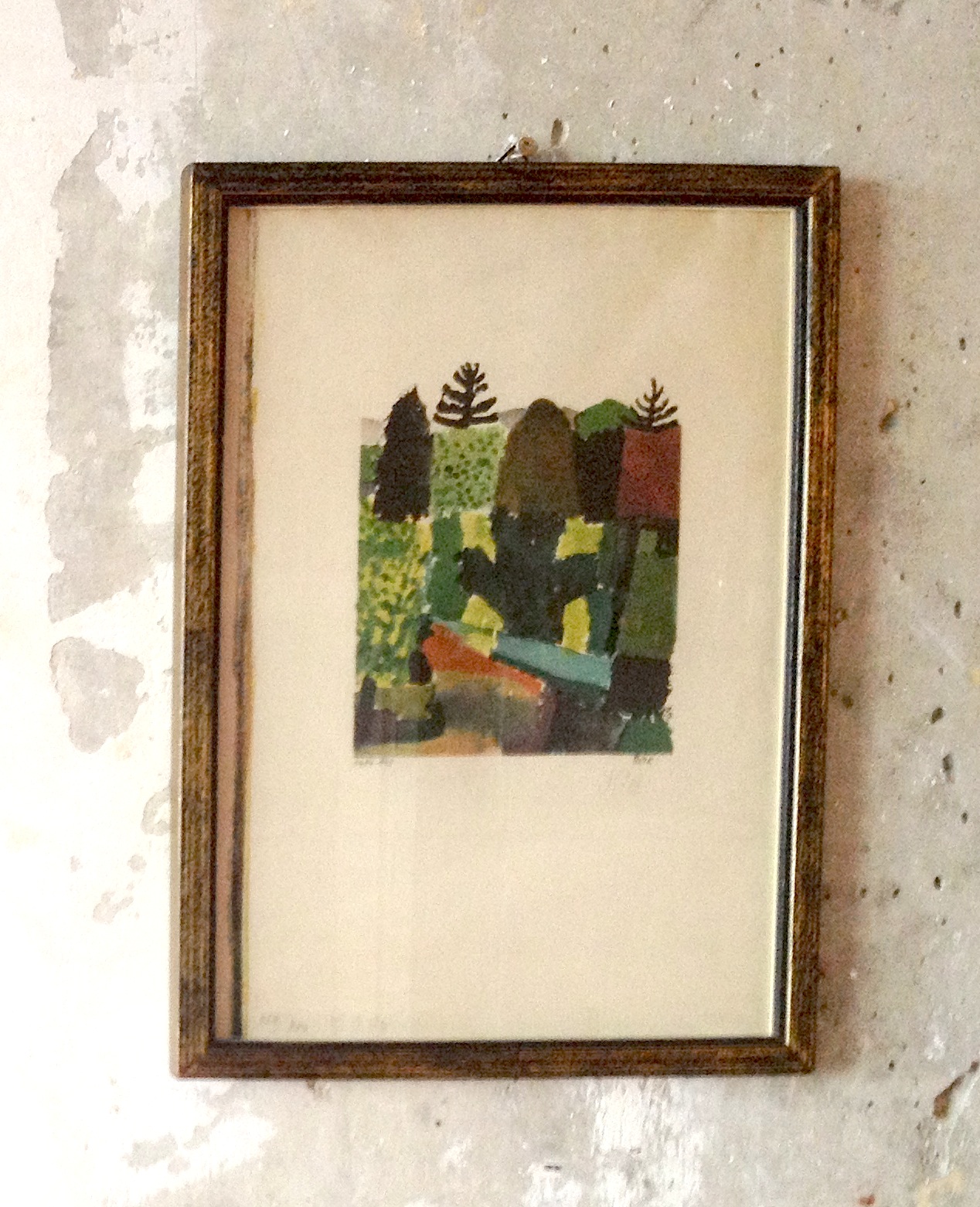 The Park, 1914 by Paul Klee.
Paul Klee was born in December 1879, in Switzerland; his father was a German music teacher, his mother a Swiss singer. Ida Marie Klee, née Frick.
Klee got deep into color theory. His lectures Writings on Form and Design Theory are extraordinary. He was part of the editorial team of the almanac Der Blaue Reiter (the Blue Rider) founded by Franz Marc and Kandinsky. Klee’s artistic breakthrough came in 1914 when he visited Tunisia with August Macke and Louis Moilliet. He was totally impressed by the light: “Color has taken possession of me; no longer do I have to chase after it, I know that it has hold of me forever… Color and I are one. I am a painter.”
After returning home, Klee painted his first pure abstract piece and the colored rectangle became his basic building block, creating a color harmony with other colored blocks analogous to musical compositions. Each color palette emulated a musical key.
The Park is obviously from Klee’s post-Tunisia period, the “cool romanticism of abstraction” as he called it.
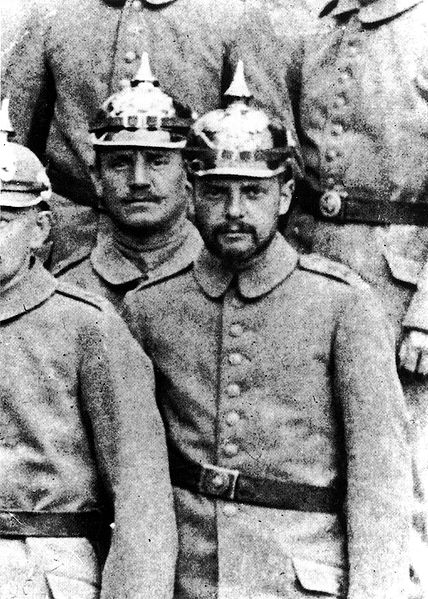
A few weeks later, the first World War began and Klee was conscripted. His friends Macke and Marc died soon in battle.
Klee continued to paint during the entire war and even managed to exhibit.
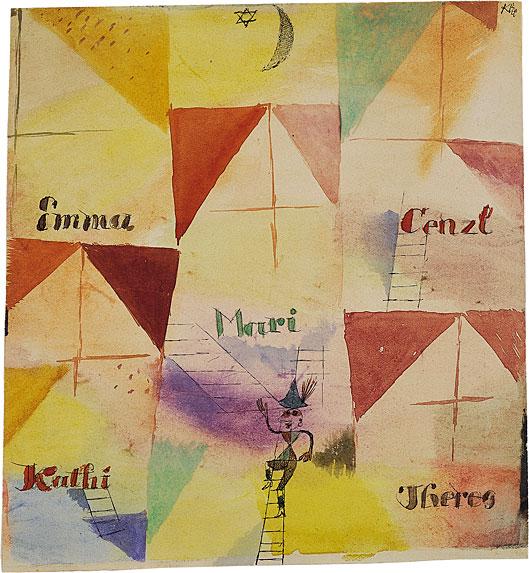
After the war Paul Klee taught with Kandinsky at the Bauhaus. And he made the “operatic paintings” like in 1919, The Bavarian Don Giovanni. An admiration for the Mozart opera as well as a self-portrait––the figure climbing the ladder is surrounded by five women’s names––all identified by art historians as singers and models with whom Klee had fleeting romantic interludes.
Klee became a member of Die Blaue Vier (The Blue Four), with Kandinsky, Lyonel Feininger, and Alexej von Jawlensky. Formed in 1923, they lectured and exhibited together in the US in 1925. That same year, Klee had his first exhibits in Paris, and he became famous among French Surrealists.
Klee taught at the Düsseldorf Academy from 1931 to 1933, then was singled out by a Nazi newspaper: “Then that great fellow Klee comes onto the scene, already famed as a Bauhaus teacher in Dessau. He tells everyone he’s a thoroughbred Arab, but he’s a typical Galician Jew.” The Gestapo searched his house and he got fired. He showed in London and Paris and met Picasso, whom he really admired. The Klee family immigrated to Switzerland in late 1933.
Klee suffered from scleroderma. He died in Muralto, Locarno, Switzerland, in June 1940, without having obtained Swiss citizenship, despite his birth in that country.