Oblivion and Obliteration. Platon and Shannon.
I was talking with Sam about Sam this morning, while walking to the Center for Digital Cultures in Lüneburg. While I was detailing the situation – several conflicts and resolutions, paired with or impaired by a godforsaken time and ungodly level of toxicity – I had the most brilliant idea what to write for 60pages today. Then, of course, it was gone.
While forgetting it – and it did feel like I could see it vapourizing before me, as if by trying to focus on it, I made it disappear – I remembered Platon’s Symposion. In it, as you know, a group of smart men gather together the morning after a night of heavy drinking and deep thinking to try and piece together their certainly brilliant insights from the fragments of their hazy memories. As is custom and habit, and ultimately to make the pain go away, they start drinking again and as the night gets deeper, so do thoughts and gazes into cups of wine. They talk about love, betrayal, ideas, trust.
The moment of greatest clarity and brilliance, when all seems said and done and understood, coincides precisely with the moment of highest intoxication. Information and noise begin to mimic each other, resulting in white noise, that is, in black out, in oblivion and obliteration.
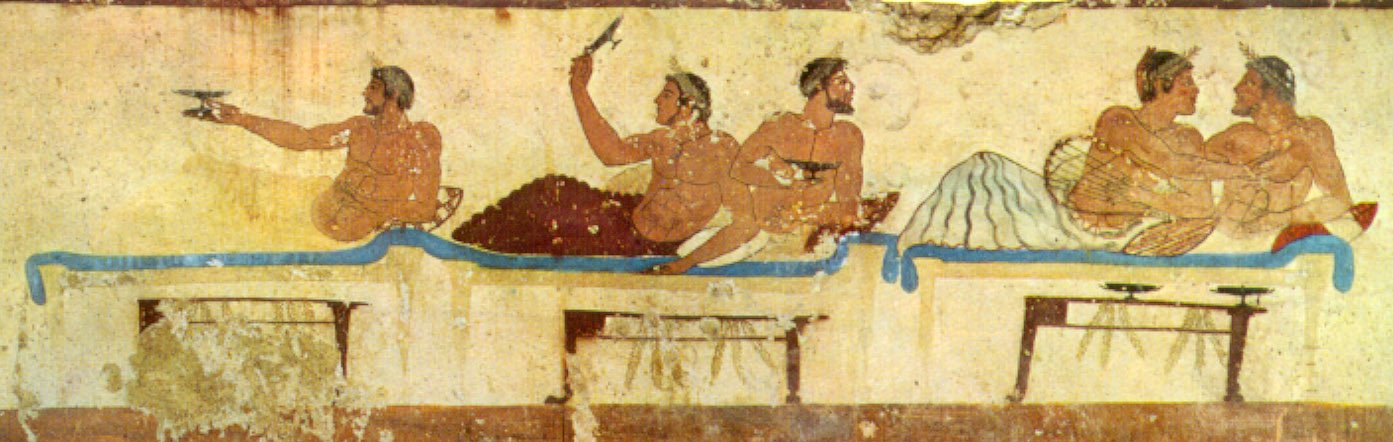
The story does go on, but Platon is a trickster. Watch closely and you’ll see that Socrates, who plays such a central role in the discussion, was never there to begin with. He is but a specter, a collective alcoholic delusion, and the only one who makes it out alive, while the rest of the highly cultivated thinkers have already collapsed into their own vomit. Only, of course, to wake up the next morning and set the same machine of memory, oblivion and their obliteration in motion once again.
This seems very familiar. I could not explain to Sam what I had tried to explain to Sam. It was all clear, and because it was, it wasn’t.
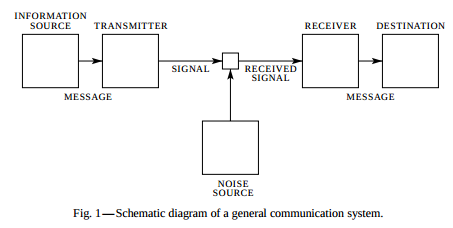
PS: Since 1948, this is the basis for the Mathematical Theory of Communication and its concept of informational entropy, as devised by Claude E. Shannon, who did not use Alcibiades, Phaedrus and wine for a theory of communication, but simply a source, a destination, a channel, and a source of noise.