Placebook (03)
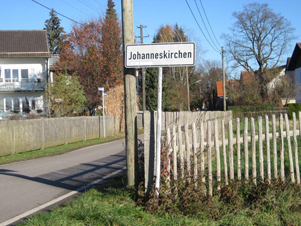
Johanneskirchen, Germany. The house where I grew up is at the edge of town. A few houses down the road there is a sign that demarcates the border of the city. On the one side of the sign there are some old farmhouses, a medieval chapel, villas, row houses, a local train station. Munich’s suburb of Johanneskirchen is an unspectacular mix of buildings, a little vernacular and certainly mediocre. On the other side of the sign, there is open land, fields with different crops, tree-lined narrow roads, hedges, and groves. No buildings except for a few scattered barns. An average landscape that is more pragmatic than picturesque. What is spectacular is that the nature of this border never changed over the past 30 years, even though both sides of it did so, massively.
On the city side, almost every plot that was empty a generation ago, is now built up. The new residences cater to all strata of society, from social housing to single-family homes. New schools, new tram lines, new bicycle tracks are built for the growing urban population. Suburbia is becoming urban.
On the other side of the border, the fields are still fields. However, their usage is not the same anymore. When we grew up the farmers planted potatoes, and kept a few cattle. We could fetch fresh milk in the evenings. Over the years, the crops changed with the supply of subsidies and demands of fashion. Farming is fashionable again, but not for farmers. First the fields became driving ranges for golf players. Now they are playing fields for the green bourgeoisie. While the farmers harvest solar power through the subsidised photovoltaic panels on the barns, they now rent out their lands to city dwellers, which find pleasure spending their leisure time with organic farming for their own needs.
Whatever changes occurred on either side, the border between city and countryside remained unchanged. Thus, the city of Munich managed to absorb a population growth of around 20% over the last 30 years within its demarcations. It had a vision to become “green, compact, urban”. And achieved it. The suburb of Johanneskirchen is certainly not worth an architectural tour, but it is a grand example of wise urban planning. The sign that demarcates the end of the city since three decades is a monument against urban sprawl. It shows the fantastic qualities of life that can occur, when the city’s borders stand firm, when city and countryside coexist.
Johanneskirchen, Germany. The house where I grew up is at the edge of town. A few houses down the road there is a sign that demarcates the border of the city. On the one side of the sign there are some old farmhouses, a medieval chapel, villas, row houses, a local train station. Munich’s suburb of Johanneskirchen is an unspectacular mix of buildings, a little vernacular and certainly mediocre. On the other side of the sign, there is open land, fields with different crops, tree-lined narrow roads, hedges, and groves. No buildings except for a few scattered barns. An average landscape that is more pragmatic than picturesque. What is spectacular is that the nature of this border never changed over the past 30 years, even though both sides of it did so, massively.
On the city side, almost every plot that was empty a generation ago, is now built up. The new residences cater to all strata of society, from social housing to single-family homes. New schools, new tram lines, new bicycle tracks are built for the growing urban population. Suburbia is becoming urban.
On the other side of the border, the fields are still fields. However, their usage is not the same anymore. When we grew up the farmers planted potatoes, and kept a few cattle. We could fetch fresh milk in the evenings. Over the years, the crops changed with the supply of subsidies and demands of fashion. Farming is fashionable again, but not for farmers. First the fields became driving ranges for golf players. Now they are playing fields for the green bourgeoisie. While the farmers harvest solar power through the subsidised photovoltaic panels on the barns, they now rent out their lands to city dwellers, which find pleasure spending their leisure time with organic farming for their own needs.
Whatever changes occurred on either side, the border between city and countryside remained unchanged. Thus, the city of Munich managed to absorb a population growth of around 20% over the last 30 years within its demarcations. It had a vision to become “green, compact, urban”. And achieved it. The suburb of Johanneskirchen is certainly not worth an architectural tour, but it is a grand example of wise urban planning. The sign that demarcates the end of the city since three decades is a monument against urban sprawl. It shows the fantastic qualities of life that can occur, when the city’s borders stand firm, when city and countryside coexist.