Ranking Julie
I like lists – best-of lists, worst-of lists, year-end lists, rich lists, breakup lists, auction record lists, box office charts, you name it. Yes, they’re flawed – they’re judgmental, intransparent, self-serving and often lack objectively verifiable criteria. But they put my mind at ease, at least for a moment, by adding structure to the millions of things that are potentially list-worthy. They tell me exactly who’s kindest, meanest, funniest, most generous, most gorgeous, most successful and so on, in ascending, descending or no order. Rankings are a great way to outsource our urge to pass judgment, which is so strong that it can get really exhausting at times.
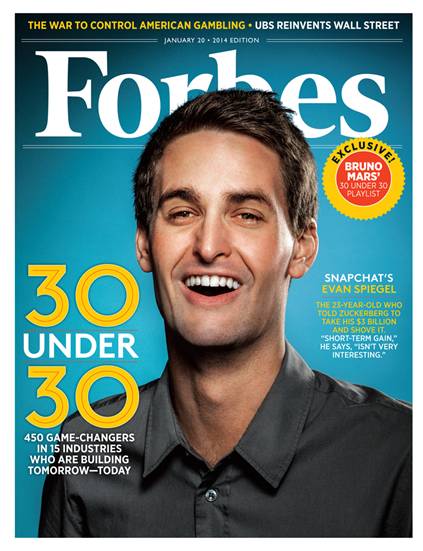
One of my favorite lists is Forbes Magazine’s annual “30 Under 30” issue of the thirty brightest talents under the age of 30 across fifteen categories ranging from science, to media to tech. That list is interesting because it mostly covers people you don’t know yet. They’re the leaders of tomorrow “who are changing the world 2014”, yet have already achieved more at an early age than most people in a lifetime. Overall, it’s a truly impressive group. It also makes you wonder. About the ingredients for success and the vastly different motivations of these 450 individuals.
When I browsed the upcoming 2014 issue online, I came across a familiar face: Julie Carney, 27 years old and currently based in Rwanda. I don’t know Julie that well and it’s been a while since I last saw her. We were on an election monitoring mission to Mauritania together, that was back in 2007. Since then, I sporadically followed her on Facebook but only had a very cursory idea of what she’s up to. As it turns out, she’s made quite an impact. Three days after graduating, she moved to Rwanda and co-founded Gardens for Health, an organization that addresses the problem of malnutrition by complementing the existing healthcare infrastructure with agricultural and educational initiatives. She’s been doing this for the past five years, an effort for which she’s now being recognized by Forbes in the “social entrepreneur” category along with people like Malala Yousafazi of “I am Malala”-fame. Needless to say she doesn’t give a damn about the comparatively hedonistic lifestyles led my many of her under 30 peers.
I’m no expert in development work but from how I’ve gotten to know Julie, I can say that the accolade is highly deserved. I can also say that, despite its sensationalist appeal, there’s something fundamentally fishy about the Forbes list. Not because it inevitably represents just a tiny fragment of the talent pool out there or because it’s inherently biased and US-centric. Those things are well understood. Causing cognitive dissonances is the fact that the ranking implies that the fifteen categories and their members are comparable. But is that really the case? What defines the worth of a specific career or line of work versus another? For the finance guys it’s easy. They’re measured against the only benchmark that properly reflects their performance: revenues generated and, by extension, compensation. For the tech guys, it’s very similar these days: amount of venture capital raised, valuation achieved, active user base built. For social entrepreneurs, the ranking is much trickier because there is no single metric to measure their success.
Perhaps that’s an obvious point or only my point or no point at all. But there’s a reason why Evan Spiegel of Snapchat (currently valued at $2bn) adorns the cover of the “30 Under 30” issue and not Julie. It’s because the metrics make the story, period. Not to everybody, but to most people. And that represents a normative dilemma. Our obsession with metrics and rankings shapes how we value things. It’s a lens that distorts our view in favor of the stuff that’s easy to grasp, to count and to measure. As a result, the less spectacularly quantifiable stuff never creates as much awareness. From that perspective, the league table mania offers a pretty sobering reflection of how we consume information.
I’m willing to give Forbes the benefit of the doubt for including the social category in its survey. It doesn’t have to be a publicity stunt just because they touted “365 ways to get rich” the week before. Philanthropy and social entrepreneurship have an altogether different meaning in the US anyway, where the approach to is infinitely more professional than in Europe. But I ask myself if we do justice to the cause by mentioning it in the same breath with dot.com billionaires, Hollywood darlings and star athletes. It just seems like odd company. Let’s face it: if people are sufficiently different in terms of interests, motivations and worldview, they don’t have much to say to one another. I doubt it’s helpful to have them compete for the attention of an equally divided audience in the ratings circus. That said, I’d be happy to being convinced otherwise.