The Desert Grows. On the 40th Anniversary of Ingeborg Bachmann’s Death
On October 17th, 1973, Ingeborg Bachmann succumbed to the burn wounds she sustained after falling asleep with a cigarette in her apartment in Rome in late September. She was 47 years old. She had been heavily addicted to all sorts of pills for a long time, her body already freckled with burn marks, because she often did not feel the hot cigarette ashes she dropped on herself.
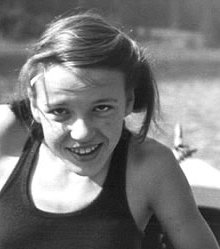
Bachmann grew up in Austria during World War 2. The way she describes – and I use the present tense because she still does – her childhood in the Austrian countryside, the reeds at the shores of Faaker See for example, or the infantile geography made up of a real, a symbolic, and an imaginary “Galicia”, with a marauding “Tschernowitz Bande”, a childhood gang, resonates with me – having grown up in the same landscapes – in ways I haven’t even remotely experienced with any other writer.
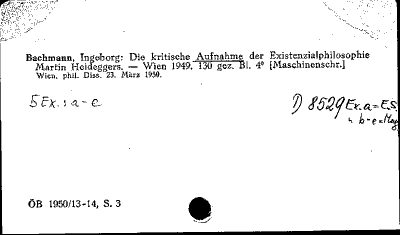
After the war, she studied philosophy and did her PhD on Heidegger. This would prove to be a central opponent and driving force in her philosophy of thinking and writing, of “Dichten und Denken” and I like to believe that while the “Voralpenschwachdenker Heidegger” (thank you, Thomas Bernhard) never achieved the superposition of the two, Bachmann did. She wrote about Heidegger, about Goya and Saturno devorando a su hijo. The dissertation ends with a brutally touching paragraph, but I am traveling and do not have access to my library, otherwise I would quote it here.

My theory is that, throughout her life, and in her poetry, as well as her prose and theoretical work in the Frankfurter Vorlesungen, Bachmann continued her demolition of Heidegger. Evidence of this can be most significantly found in her last fragments, the two books following Malina to complete the Todesarten cycle: Der Fall Franza (also: Das Buch Franza) and Requiem für Fanny Goldmann, which were only published posthumously.
I was 25 and had fled to a Moroccan mountain village because work with Kittler on Musik und Mathematik I/1: Aphrodite was killing me and him. I was really not doing much, taking walks, smoking a lot, reading. Coincidentally, and unaware that there was a connection between Heidegger and Bachmann, I had brought Heidegger’s Was heißt Denken? and Bachmann’s Das Buch Franza. At first I thought it a stoned thought, but the two books seemed to revolve around very similar topics and abysses. After my return to Berlin, I read Bachmann’s biography and dissertation (which, by the way, is not a very good one) and decided to write about it. I didn’t get anywhere.
I kept rereading the books. Verwüstung, Geschichte, Auslöschung, Tod. Desertification, history, extermination, death. Franza everywhere. Bachmann’s book was published containing three mostly identical fragments of Franza’s demise. It’s incredible how you can see the evolution of destruction in both the story and the way Bachmann works.
At some point, I realized that Bachmann’s Franza and the temptation to identify her as Bachmann was an incredibly solid, brutal ruse. There was another voice in the book, the voice actually, the narrator, the one looking at Franza and being with her until the end: her brother. Martin. Martin, the geology, then history student. In German, both work with the same word: das Geschichte und die Geschichte. Martin with his girlfriend Elfi Nemec (meaning German). Martin. Martin Heidegger and his wife Elfriede. I dug deeper and tried to uncover all the hidden meanings and connections to Heidegger.
Many of the things happening in the Todesarten cycle are in fact autobiographical and actually happened. Both Bachmann and Franza traveled to Egypt, for example. Franza, however, dies there.
In the end, I realized that it had been a mistake to disassemble Bachmann in this academic fashion and that I had come dangerously close to dismembering Bachmann in much the same way as the monstrous protagonists in the book had taken apart Franza. The union of “Dichten und Denken” of Ingeborg Bachmann is ever present.
Click here to hear the author read her poem Dunkles zu sagen.
Dunkles zu sagen
Wie Orpheus spiel ich
auf den Saiten des Lebens den Tod
und in die Schönheit der Erde
und deiner Augen, die den Himmel verwalten,
weiß ich nur Dunkles zu sagen.
Vergiß nicht, daß auch du, plötzlich,
an jenem Morgen, als dein Lager
noch naß war von Tau und die Nelke
an deinem Herzen schlief,
den dunklen Fluß sahst,
der an dir vorbeizog.
Die Saite des Schweigens
gespannt auf die Welle von Blut,
griff ich dein tönendes Herz.
Verwandelt ward deine Locke
ins Schattenhaar der Nacht,
der Finsternis schwarze Flocken
beschneiten dein Antlitz.
Und ich gehör dir nicht zu.
Beide klagen wir nun.
Aber wie Orpheus weiß ich
auf der Seite des Todes das Leben
und mir blaut
dein für immer geschlossenes Aug.
http://www.youtube.com/watch?v=wBWkMC5bow0
http://www.youtube.com/watch?v=fgG3EaOCh_c&list=PL396A18FE6F53226E