THE THREE LIVES OF CHRISTINA THE ASTONISHING (#56)
As Told by the Holy Woman in Her Own Words
A Hundred or So Years after the End of the World
That afternoon he sentenced three more men to death for various infractions.
In the evening Jonathan came to the Lady House asking to speak with Belinda and me. Just turned sixteen, he was very shy and had difficulty telling us his problem. But finally it came out. As his father’s favorite, Jonathan was now apprenticed in the fishing fleet to gain some firsthand knowledge of our duchy’s primary livelihood. He had met a girl in the village where the boats were docked and had fallen in love with her. Now a baby was on the way. He wanted to marry the girl but was afraid of what his father would do if he told him. “He could send me away—or marry her to someone else—or worse!”
Belinda and I were silent. All these possibilities were equally likely. The next moment I fell into a trance and began to remember the future. The baby would be fine—I saw it healthy and squalling; that was all I could get. I told Jonathan and he was very relieved. It still left the problem of breaking the news to the Duke. “How far along is she?” asked Belinda. About two months, Jonathan thought. “Then wait a bit. Let Christina and me sleep on this, and we’ll figure something out.” She got up and gave him a big motherly hug, which he was still young enough to want. But when I hugged him, a great sadness came over me.
After he’d left, I felt my stomach turn over ever so slightly. “Something momentous is on the way,” I told Belinda.
Many life strands were about to come together. The problem was, I couldn’t see what they were.
Historical note:
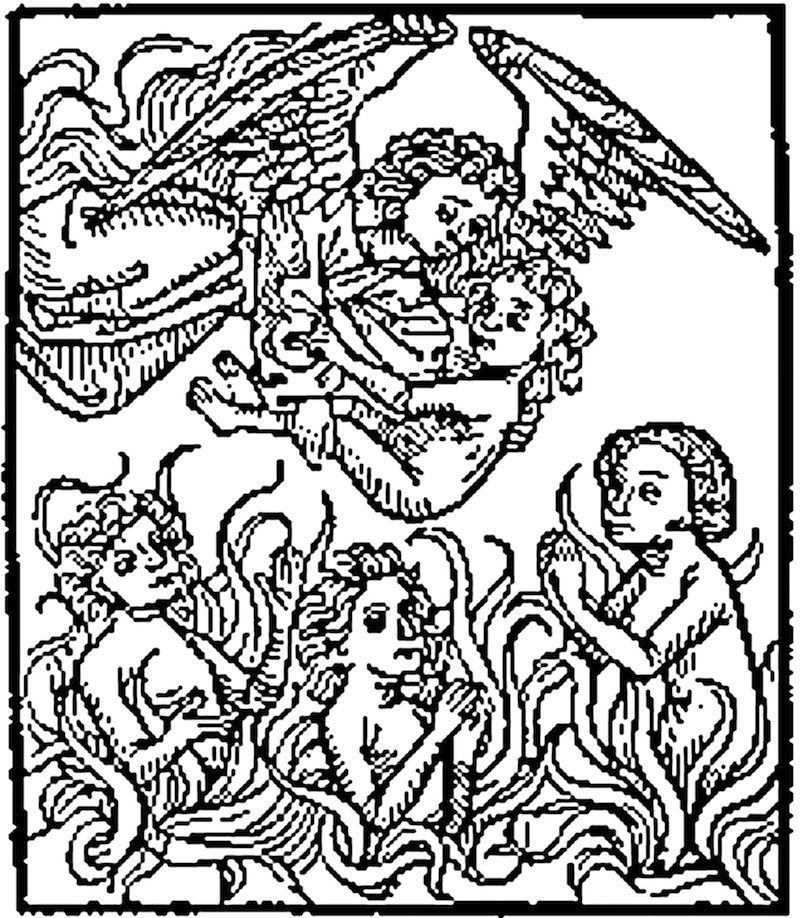
The twelfth-century Flemish saint Christina Mirabilis (1150–1224 C.E.) died, it is said, as a result of “the exercise of inward contemplation.” Brought by angels to purgatory and then to God in paradise, she was given the choice of remaining in heaven or returning to earth to show men the holy path by virtue of her suffering in a body made impervious to death. Christina chose to come back to the world of the living. With her new superpowers she could fly like a bird, breathe underwater, and endure fire, drowning, evisceration, and other bodily torments. Her breasts alternately leaked milk and olive oil to nourish her during her travails. Though preferring solitude, Christina demonstrated her ability to endure suffering to all the men and women she encountered, hoping to convert them to piety by her example. After many astounding adventures that saw her move from demonstrating bodily torment to transmitting acts of grace, she died a second time, only to be called back briefly to answer an urgent question posed by her mother superior. Christina’s hagiographer, the learned Dominican Thomas de Cantimpré, does not give us the substance of this question. Once she had answered it, Thomas says, Christina died peacefully one final time and “passed to the immortal age of ages.”