Triple A, B or E?
Late last night Jewrhythmics featuring Jossi Reich performed at Kater Holzig. Ancient to contemporary stories wrapped in 80s synthie-music, sung in English, German and Jiddish. The Kater crowd, as divers as the band on stage, is dancing. The sound is not so well balanced, the lyrics hard to grasp. I get one line: Ich hege keinen Groll – I’m not bearing any grudge.
A fire burning outside Kater Holzig like you would imagine from the same decade somewhere in New York, and in fact the language fits: English is spoken around the fire by a couple of people from Chili, Canada, Scotland, Spain, Iran and Berlin anyway.
Later this noon, coffee and a cigarette in bed, reading an article about the Ethopian origin engineer Derege Wevelsiep who was adopted by a German couple, and his traumatic struggle to become an – so he says – A-class German instead of a B-class citizen.
I get up and dress for November, walk down the hill towards Unter den Linden, pass the reconstruction site of the Prussian Schloss where I see some case studies that will be found inside once it’ll be finished: an ancient African mask.
I turn right after the museum of German history towards the Berliner Herbstsalon, the exhibition presented alongside the opening of Gorki theatre’s first season headed by Shermin Langhoff, where I see a long carpet with oriental ornaments hanging down from an upper floor landing on the ground outside, wet from the rain. 30 artists were invited to reflect Germany’s identity by referring to the buildings that surround the Gorki theatre, standing for the concept of nationalism of modern age. In other words: The “other” is outside, and we are inside. Now, the other is inside. No surprise that the castle of restoration opposite the boulevard shows the African mask as the exotic other.
Inside, walking up the stairs to the first floor, a sort of graffiti on the windows, continue telling what this exhibition may be about. I read triple A. AAA, like a rating from Standard and Poors, which Germany has in fact. However, the currency inside this exhibition is different. It stands for triple Angst. Angst of the other? Angst of something we can’t just easily shake off?
Amongst these art pieces, installations and performances there is a dance performance (“Der Mann, der über seinen Schatten springen wollte” – “The man who wanted to shake off his shade”) of the artist Nevin Aladag. Two young dancers, new Germans, trying to shake off their shades. Whose shades? Do they belong to all of us?
Leaving the exhibition a last performance by Otobong Nkanga (“Face me, I Face You”). Three dancers are randomly tied together by long wooden sticks which they keep balancing between their bodies. We, the others, are spontaneously taken into this fragile, moving, smiling, interactive mobile.
I think that deserves a Triple E. Easy, wasn’t it?

Fire Kater Holzig
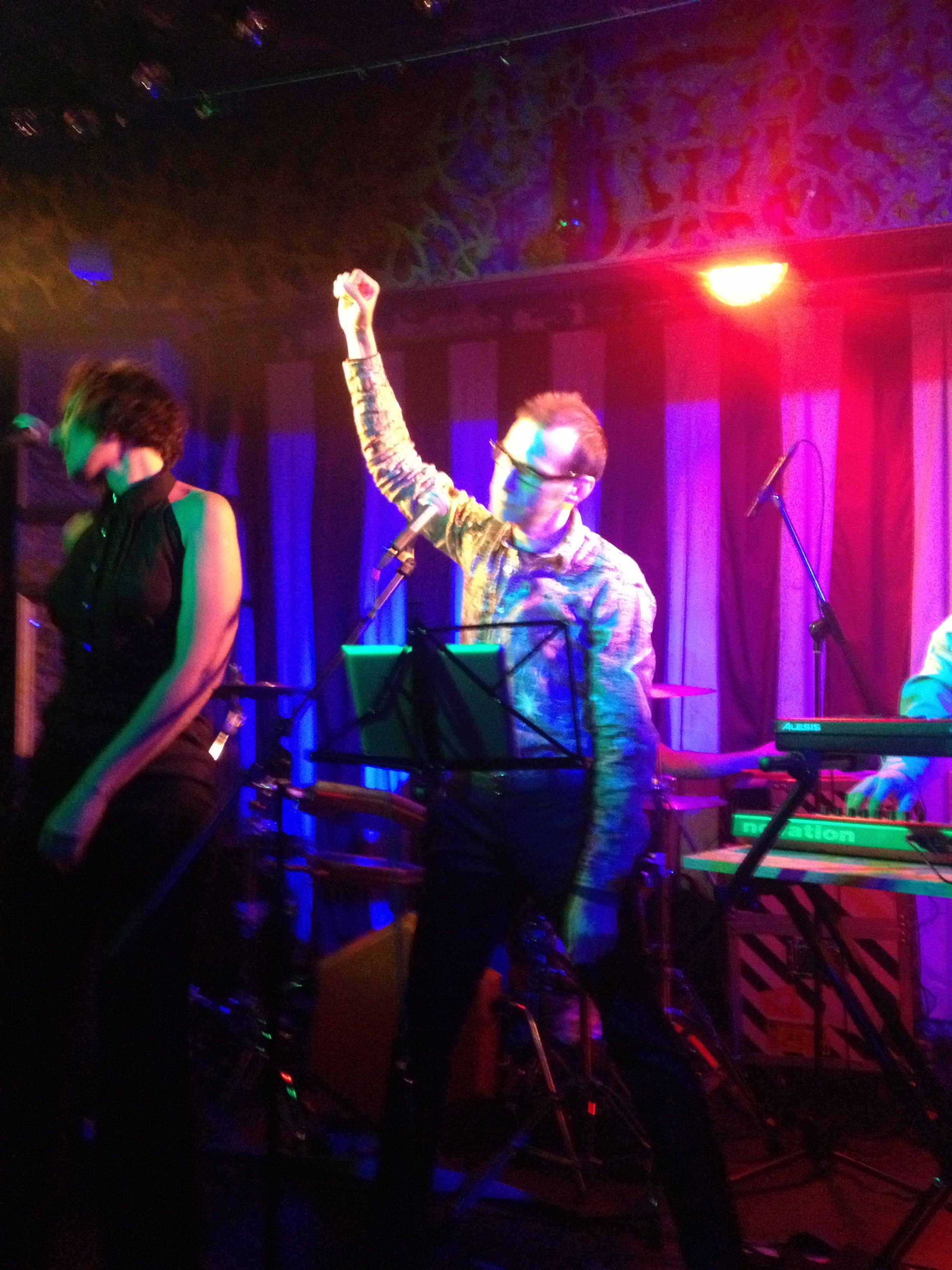
Jossi and the Jewrhythmics
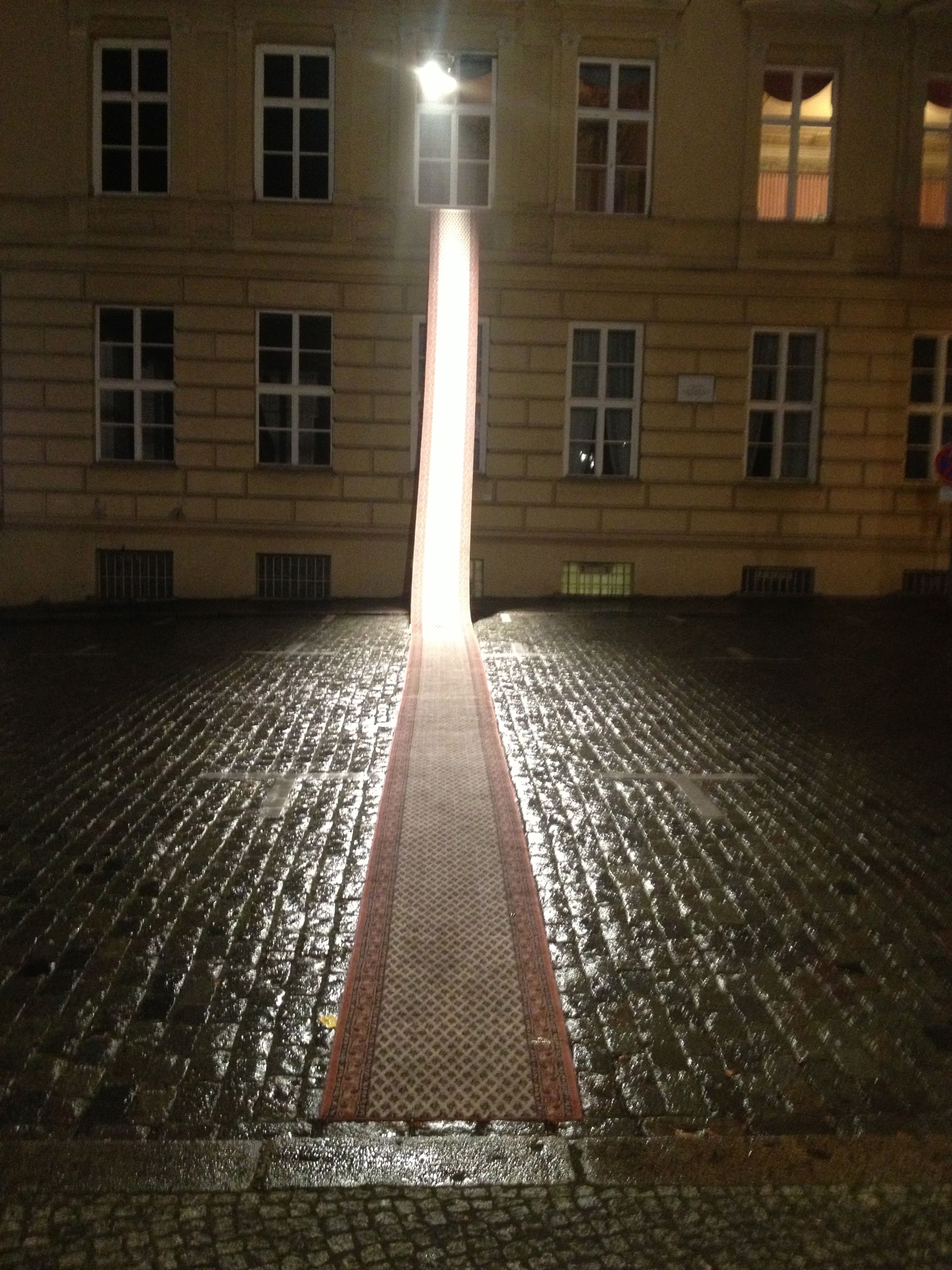
Oriental Carpet Herbstsalon
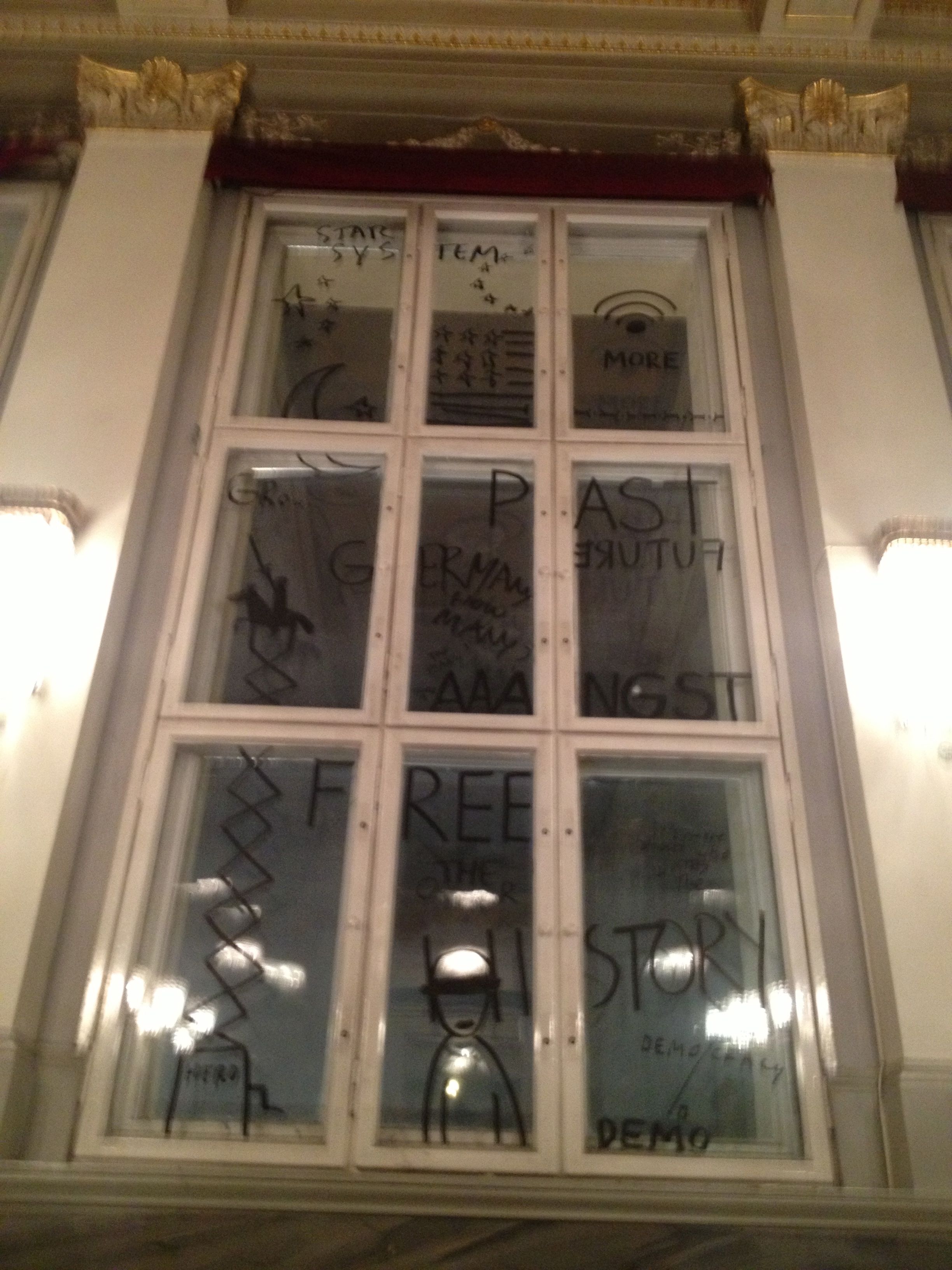
Triple A
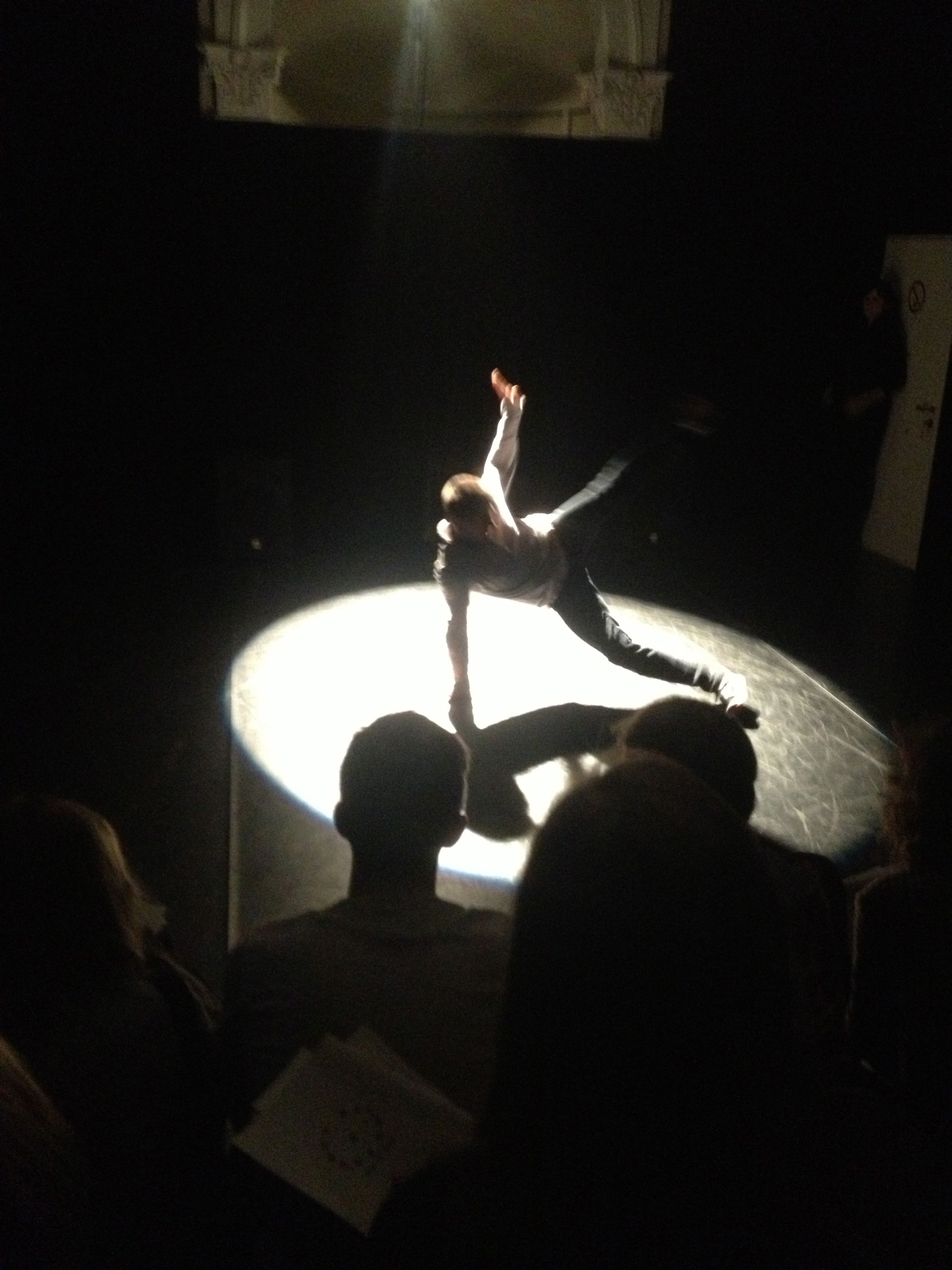
Man jumping over his shade
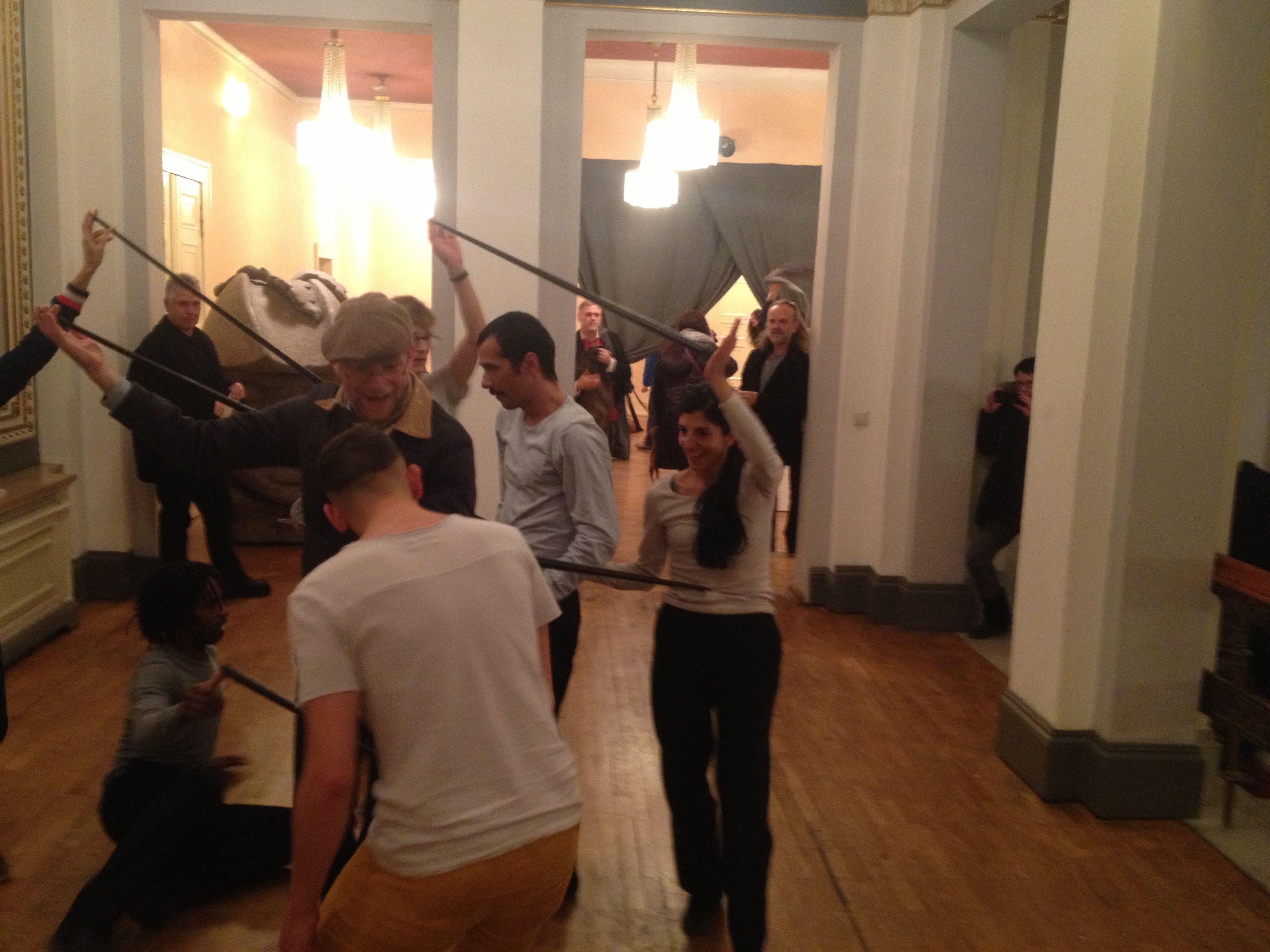
Triple E performance