Zoë’s Tropes
Almost over now. It ain’t dark yet, but it’s getting there. Maybe I will actually save one post for later. But today is about my friend Zoë Claire Miller, artist, connoisseuse of all things odd, and owner of Novak, The Critical Dog.
In October 1666, two fishermen caught a huge shark off the coast of Livorno. Ferdinando II de’ Medici, obsessed with science, technology, and natural philosophy, ordered its head sent to Nicolas Steno, a Danish polymath who taught anatomy in Padua at the time. Upon dissecting it, Steno was surprised to find that its teeth bore a striking resemblance to what a colleague working in natural philosophy had just recently shown him: so-called glossopetrae, tongue stones, which he had found embedded in rocks, while hiking in the mountains. While at the time it was commonly accepted knowledge that these objects had fallen from the moon, as Pliny the Elder had stated, or grew naturally in the rocks, as nature’s playful curios or lusus naturae, sculpted by the divine craftsmanship of creation, Steno was immediately convinced that they were actually just shark teeth, a view that he shared with only a handful of the most progressive scientists of his time. The only question was how they ended up on a mountain. It was simple, Steno concluded, all the geological structures on Earth must have been formed by the tectonic movements of different strata, created by sediments, solidifying, being compressed, changing state, being pushed up by the next stratum, over millennia…
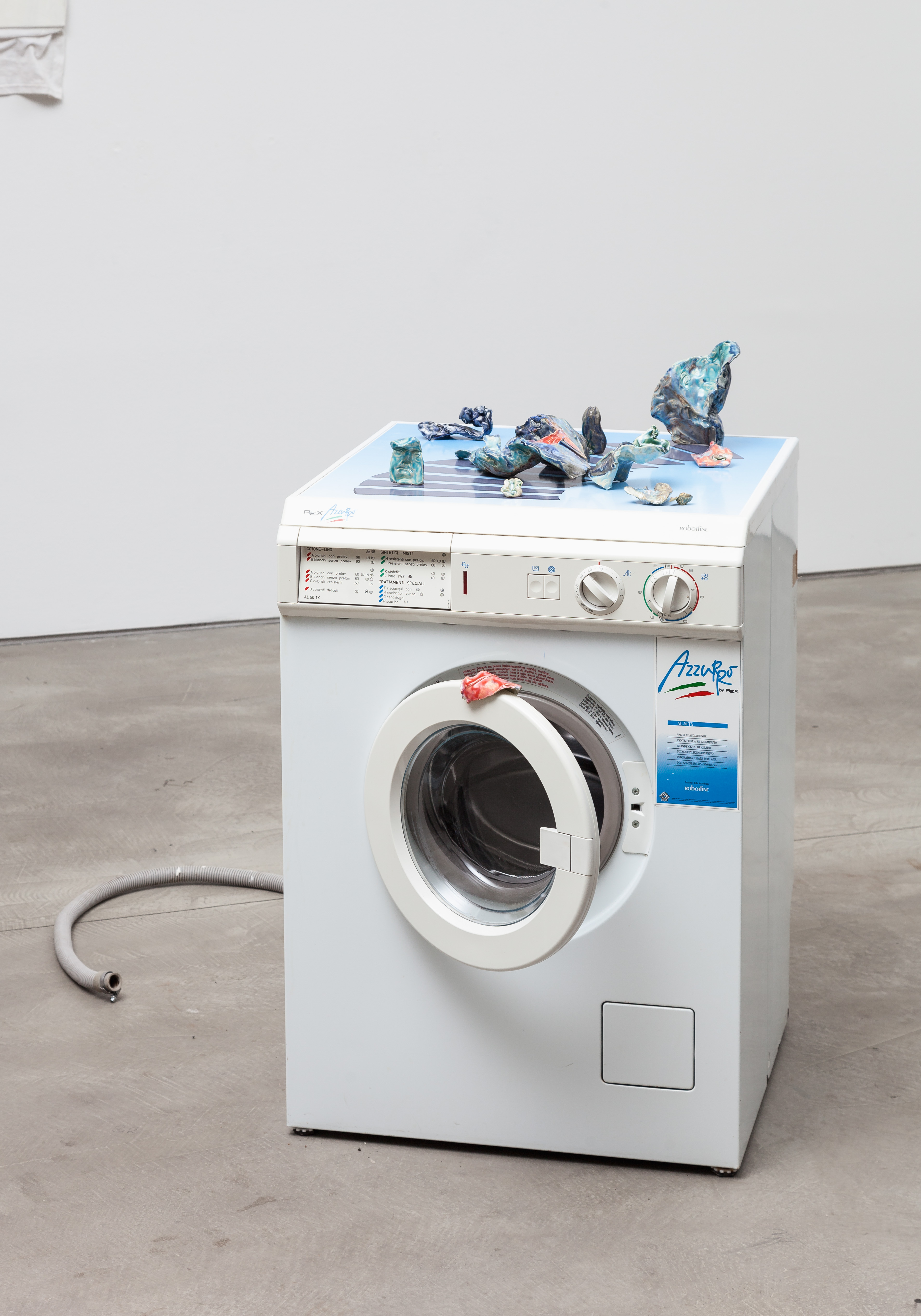
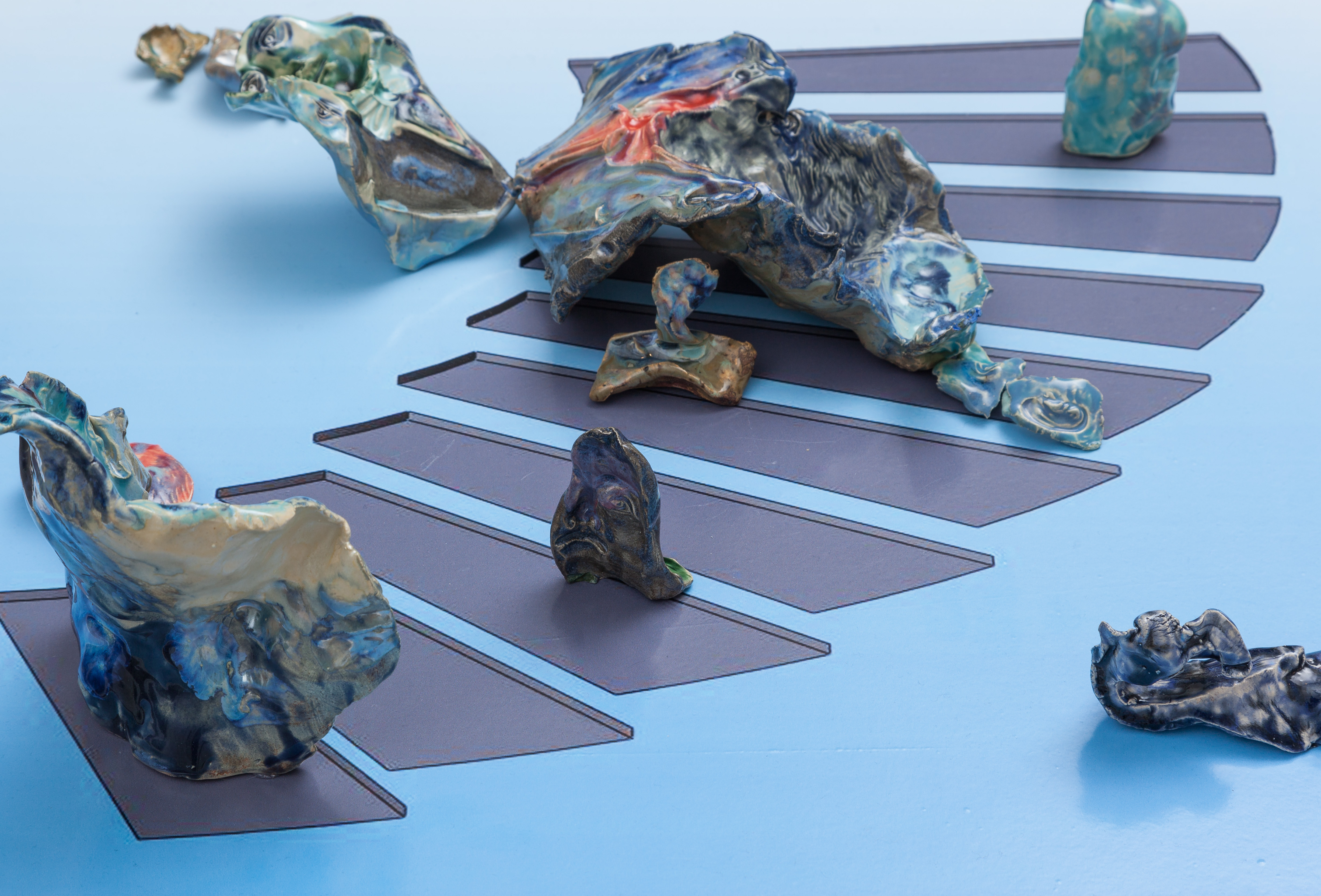
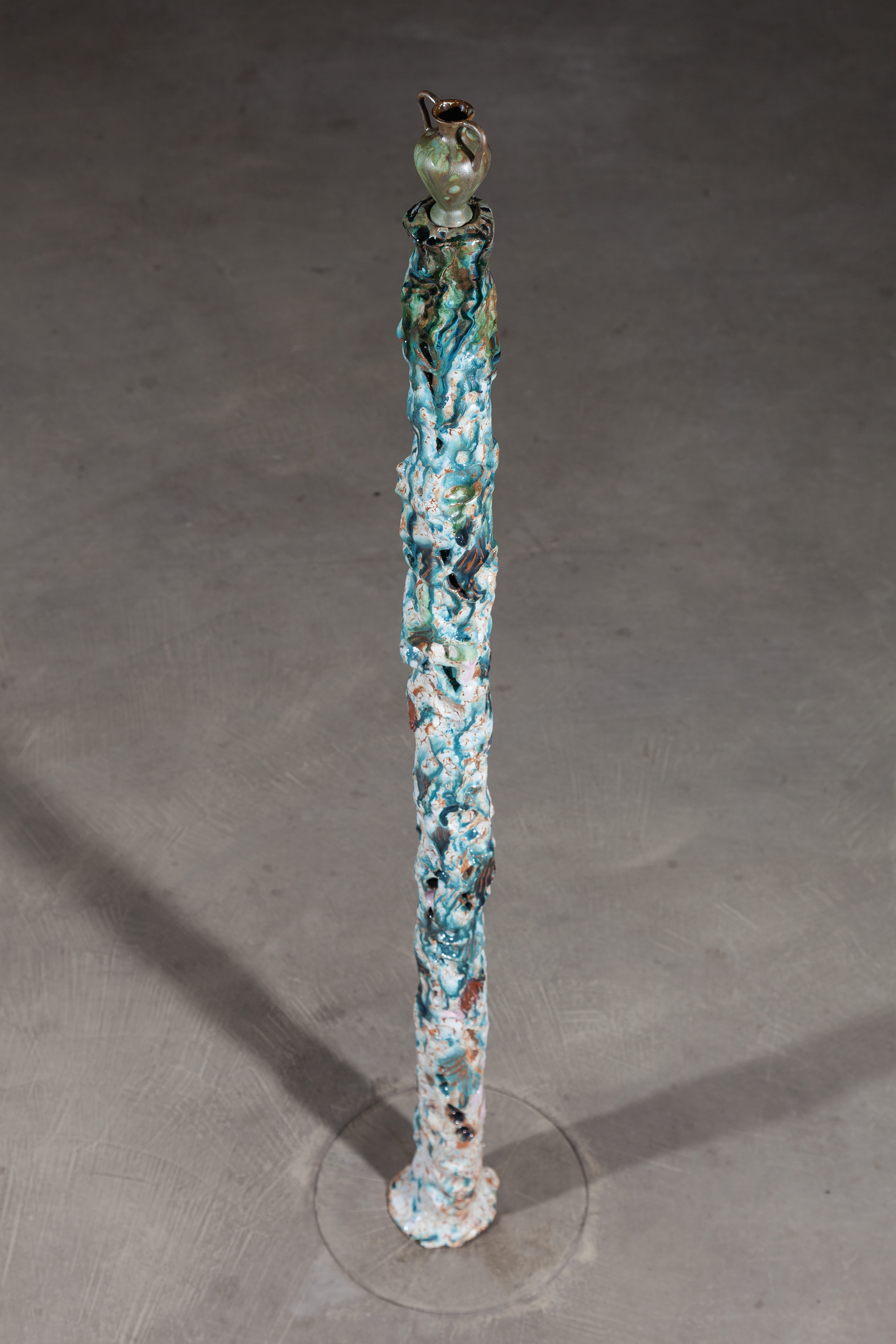
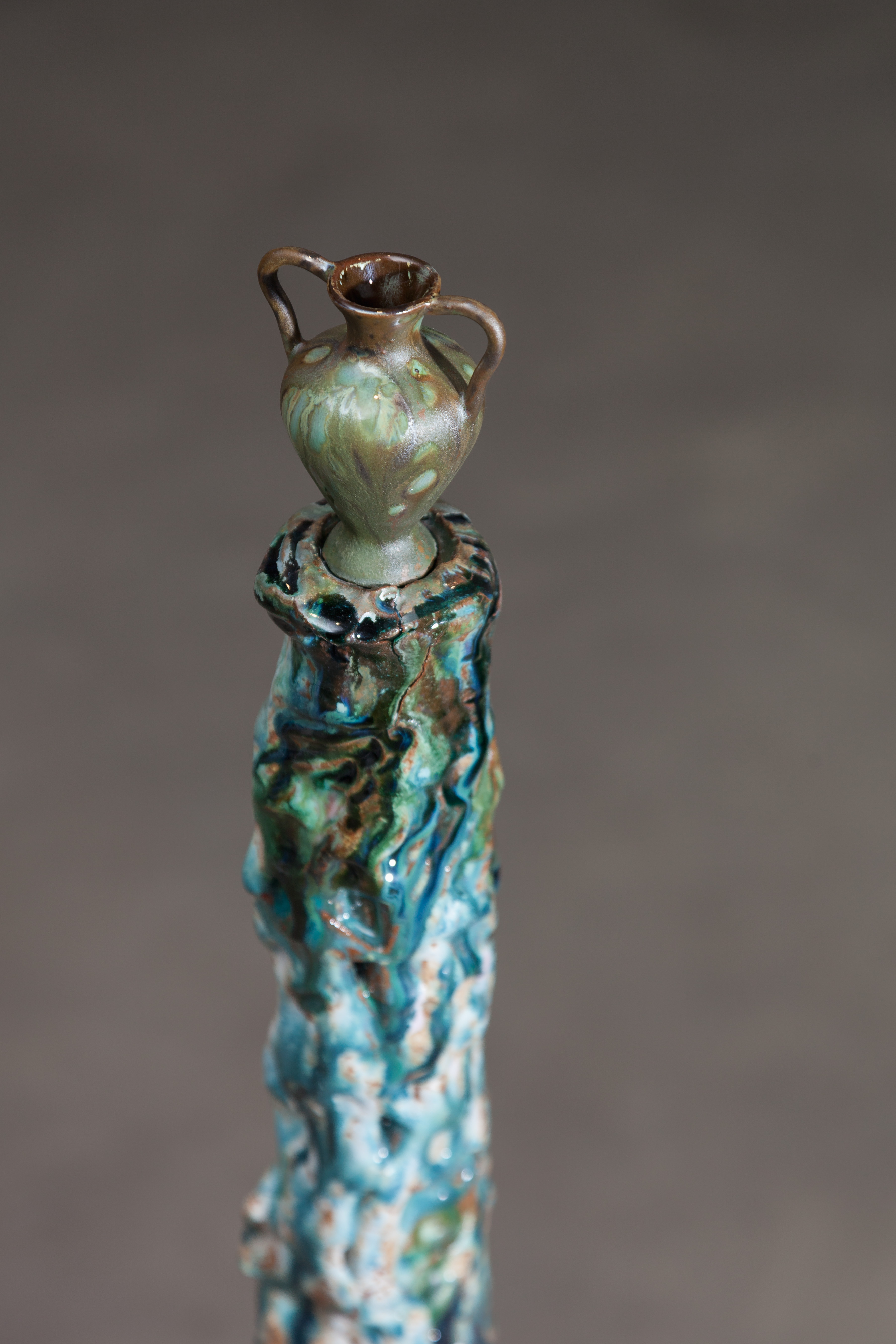
Zoë’s ceramic works are exactly such sentimental sediments. If we explore them, they offer an iridescent space of interpretation, between nature and art. They could as well be a lusus naturae, which autonomously created the grimacing visages growing from the clay like a Golem. At the same time, they allow for archaeological exploration: we find imprints of artefacts of Modernity, sculptures within sculptures, objets trouvés that the artist hunts and gathers while foraging through contemporary culture. They comprise the reliefs of fetishistic fossils, relieving them of their teleological duties. Yet they transmit their own cult and culture, like amber transports insects, once spellbound by ambergris’ smell, through time and space. Zoë’s technique mirrors and channels its own history and evolution. While being conceived, sculpted and shaped, her pieces also follow their own morphogenesis. As a ceramics master, the artist deliberately moulds and glazes the clay in a way that causes it to remain a dynamic material. The firing process is not only used to conserve the shapes and colours of the glaze, but is another step in the evolution of Zoë’s multi-layered creations. Hence, the sculptures remain shape-shifting, gaudy, crackling, amorphous and amorous juggernauts, babbling glossopetrae telling stories and histories alike. These stories and histories stratify into a complex topology of fact and fiction.
Credits: The washing machine is a collaboration with Cornelia Herrfurtner titled Giacomo Rex Azurro. The pole is titled Amphoriskos.
Exhibition info: BATMAN ELEKTRONIK, 9 NOVEMBER – 19 JANUARY 2014
Curated by Fritz Bornstück & Ernst Markus Stein, Galerie Mikael Andersen Berlin